


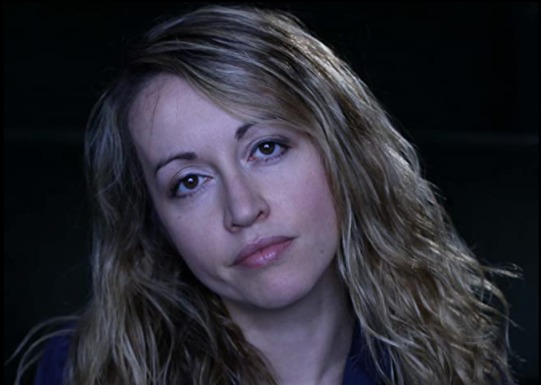
 Groundbreaking British writer-director Sabrina Doyle pulled from her own life to showcase the struggles of a single mom raising multiple children and with little income.
Based in Los Angeles and London, Sabrina’s work has been supported by Women in Film Los Angeles, The Chimaera Project, Google, Panavision, the Mary Pickford Foundation, and BAFTA Los Angeles. Her short films have been seen on the pan-European TV network ARTE, the cable channel ShortsTV and the streaming service Fandor, as well as at dozens of international film festivals. She was also honored by the British Academy BAFTA as a Brit to Watch and chosen to participate in the inaugural Sony Pictures Entertainment Diverse Directors Program. Sabrina’s sci-fi spec Aster’s Rites was a Top 50 Nicholl Fellowship Semifinalist. She recently wrote a historic true crime screenplay for producer Robert Cort (On the Basis of Sex) and Participant Media (Roma, Spotlight).
Previously, Sabrina worked as a BBC journalist for six years, producing content for the UK’s flagship news programs, including the Today program and Newsnight. She was also Associate Producer on the Emmy Award-winning documentary The Crash Reel, Co-Producer on The Lion’s Mouth Opens, a producer on David Hockney IN THE NOW, and producer on Daredevil on a Snowmobile, a New York Times Op-Doc.
London born to an Irish father and Italian mother, Sabrina is a first-generation high school graduate. She went on to earn Bachelor’s and MPhil degrees from Cambridge University, where her work was supported by the Arts and Humanities Research Council. She subsequently won a Fulbright Scholarship to attend the American Film Institute, where she completed her MFA in Film Directing.
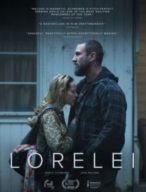
Her latest film, LORELEI follows Wayland (Pablo Schreiber) after doing a 15-year stretch in prison. He unites with his high school girlfriend, Dolores (Jena Malone), who is now a single mother of three. What follows is a lyrical take on love, regret, and second chances.
In this one-on-one interview, Sabrina reveals her passion for filmmaking and the challenges she faced in bringing this powerful story to life.
What drove you to write and direct this emotionally moving film?
Sabrina Doyle: I grew up in a blue-collar family knowing financial hardship. Usually, films like this are well-meaning but I felt that they often dwell too much on poverty or they romanticize hardship and make it noble. So I wanted to show the highs and lows and the resilience of these characters—the fight they have inside them and their ability to dream big, even when life conspires to keep them small. Lorelei was in response to what I felt was missing in working-class dramas.
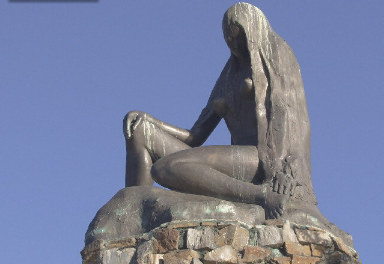
There are so many creative metaphorical choices you made in this film, starting with the film’s title about the legendary German siren, who, like Dolores, sought revenge for an unfaithful lover.
Sabrina: What I like about the siren symbolism is that it’s a creature of two hearts—a woman on the top half and a fish on the other. The depictions of women, especially mothers, are often either Madonnas or whores. These characters seemed a bit flat to me. The fact that you can be a bad and good mother at the same time is interesting. So Lorelei depicts a contradiction—a woman of two hearts. Instead of luring men to their deaths, Dolores forces Wayland to change, to become someone new so he can raise these three children.
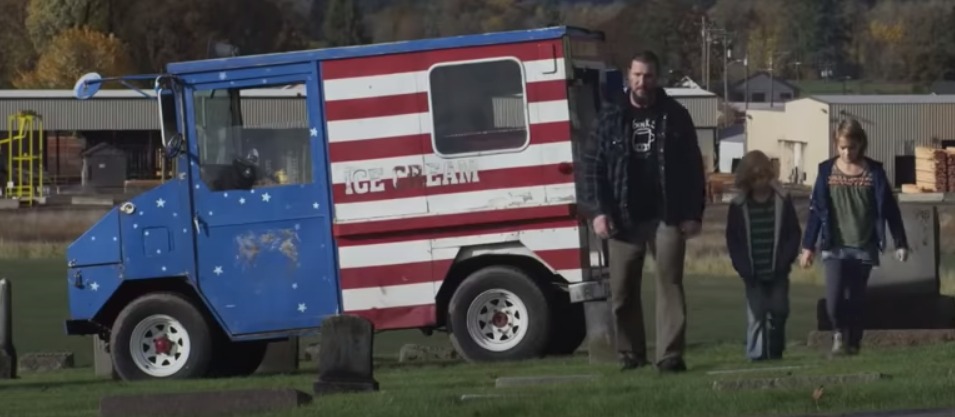
So I have to ask why you had Wayland drive an ice cream truck?
Sabrina: Sometimes I have these moments. Ninety percent of writing is re-writing. So I’ll go back and put in something that just comes to me in a flash. It’s the same with the ending. It just came to me in a creative flash. The ice cream truck works on two levels. It was something that connects Wayland to his childhood. It also depicts him starting to open up to the children. He loves the smile on their faces when they see it. It’s about second chances, about not getting things right the first time. Like the truck, he’s broken down and needs to be rescued. On a side note, the truck was a nightmare to shoot. It broke down all the time (laughs).
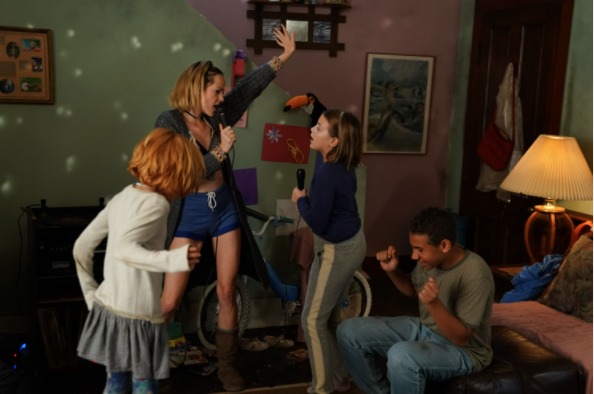
And why the choice of three kids from different fathers, each with wildly diverse issues?
Sabrina: They do challenge Wayland in different ways. Sometimes in films, I feel children are kind of generic secondary characters, that they’re in the story to simply support the main characters. They exist more as a structural element rather than fleshed-out people. So I wanted the children to live and breathe in their own right, to be individual people from different fathers. It’s also easier to love younger kids and more challenging to raise older kids.
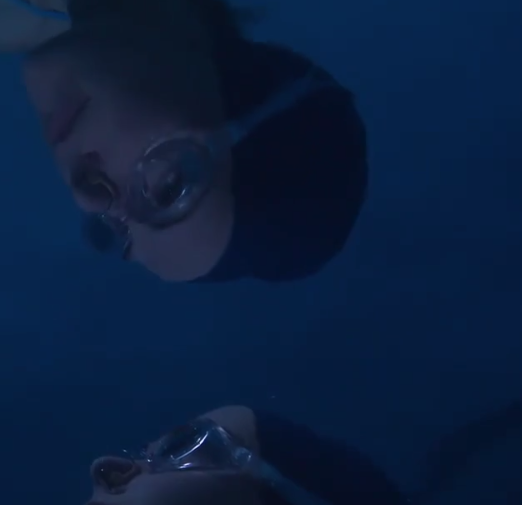
The scene with Dolores in the pool. That look she gave Wayland while underwater. What were you going for there?
Sabrina: When she sees him staring at her while she’s underwater, I wanted to show him intruding into her world. She’d gone back to this idealized teenage version of herself, of being a synchronous swimmer when she was young. At this point in the film, they are growing apart. She’s allowing herself to be selfish. She’s not really seeing him but a ghostly image of herself and what she could have become—a successful Olympic swimmer. As a mother, she has needs as well.
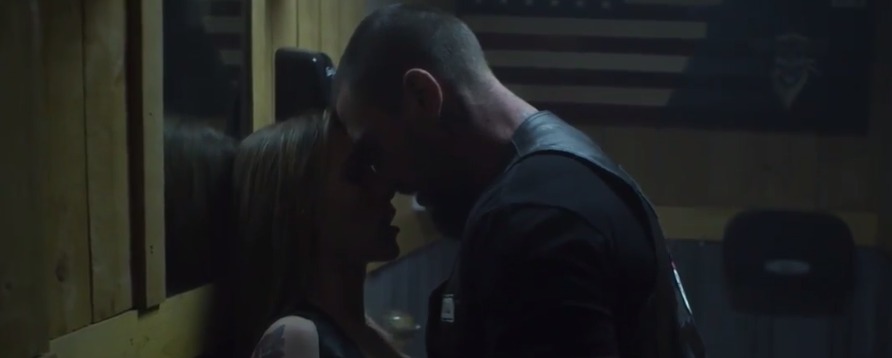
When Wayland briefly returns to his biker gang, he starts to have sex with a girl in a bar bathroom. But he stops when he sees “James” tattooed on her breast. Can you go into that a bit?
Sabrina: That’s a callback to when Wayland tries to make love to Dolores but he can’t because of his long time in prison. He’d noticed earlier that Dolores still had his name tattooed on her and seeing a guy’s name on the girl in the bar brought that awkward moment back to him. It’s a sobering moment when he realizes he has someone at home.
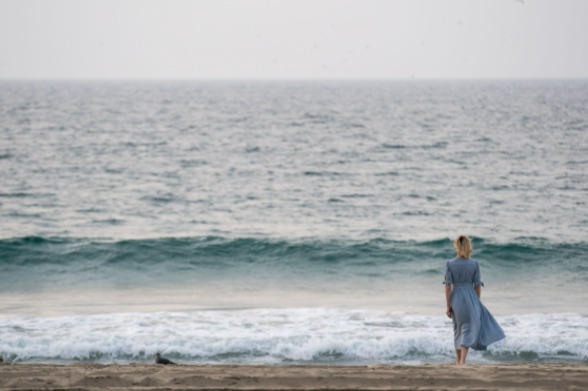
Okay, the invisible barrier he bumps into at the ocean when trying to go after Dolores. His failure to connect with her? Her life? Her dream?
Sabrina: Yes, absolutely. And earlier in the film, she dreams about her failure to access the ocean. I also use that as a recurring image, even at the end when Dolores is still behind glass. In the ending, it’s kind of a magical moment for the children when they see their mother as a mermaid. So whatever happens to this family, at least they have this one unforgettable, transcendent moment. The glass barrier, when first introduced, is kind of a pretext for the ending of the film.
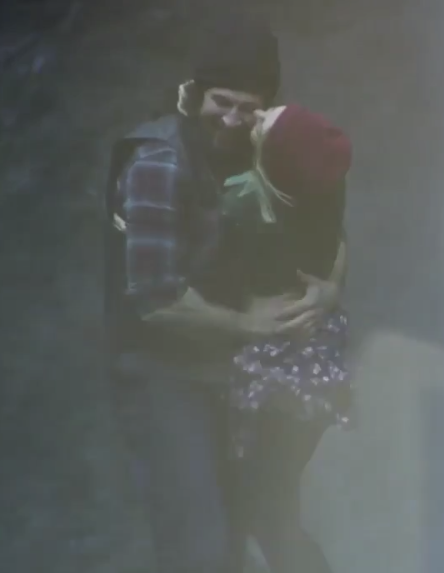
The waterfall love scene was engaging and poignant. What were you going for there?
Sabrina: I think water works on so many levels in this film. On the primary level, it’s being reborn into something new, the idea of washing everything away and accepting change. It’s a bittersweet moment that depicts the last time they were together before he was sent to prison. He tells her he has to go and that’s when he commits the armed robbery. But in the scene, he closes his eyes and imagines a different path after she asks him to stay.
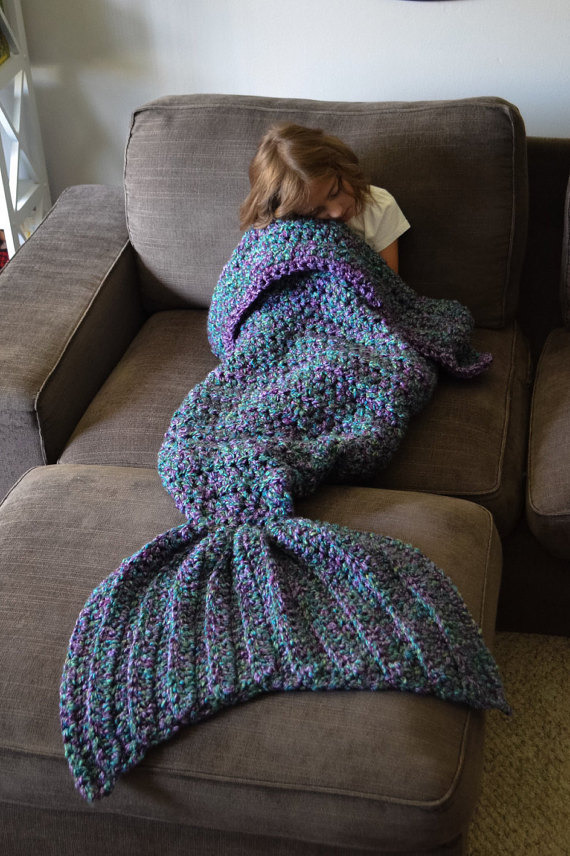
In L.A., the kids and Wayland watch Dolores in a tank as a mermaid. She surfaces for air and her expression changes from sadness to joy. She then kisses a younger Wayland who appears with her in the tank. Can you go into that a bit?
Sabrina: Throughout the film, Dolores has this guilt about being a bad mother. Before she leaves, she has this fight with her daughter, Periwinkle who screams at her—“I hate you”—and they exchange horrible words. You see the pain Dolores feels when she realizes she’s not been a good mother. But she also has her own needs. And those two can conflict with one another. So getting the job in L.A., she found part of herself that she’d lost in the last 15 years. When you have friends in different parts of your life, you tend to be a different person for each of them. But when these different versions of yourself suddenly collide, it can create a crisis in you. When Dolores sees Wayland and her children from the tank, the different phases of her come together and she doesn’t know who she is when she comes up for air. It’s unsettling. But when she realizes that Wayland and her children came all the way down the coast to see her, she realizes that she is loved by her family. So she goes back into the tank and does this incredible job of underwater acting—of serene love, acceptance, nostalgia, and regret. There’s this wonderful moment of forgiveness for all the horrible words she and her children have exchanged. And then there’s this moment with Wayland about saying goodbye to what they didn’t have—had he not screwed up and gone to prison and that she didn’t have three children by other men.
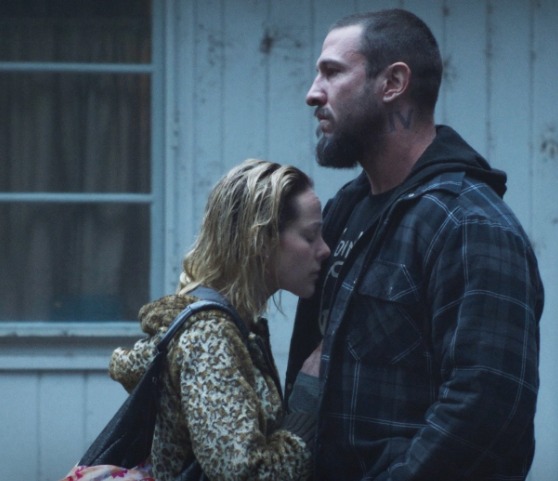
What have you learned about working in this business that surprised you?
Sabrina: That’s a tough question. I feel my tenacity and resilience got me where I am today. I’m surprised by the extent to which I had to draw on that resilience. Independent films are really tough to make. Your funds and time are always running out. I’ve made short films but when making this feature film, I really had to draw on my resilience and adaptability. It’s not a sprint but a marathon. And, of course, dealing with the pandemic was a surprise.
Lorelei will be in Select Theaters & On Demand July 30, 2021
(photos courtesy of Vertical Entertainment)

Alex A. Kecskes is a published author of "Healer a Novel" and "The Search for Dr. Noble"—both now available on Amazon. He has written hundreds of film reviews and celebrity interviews for a wide variety of online and print outlets. He has covered red carpet premieres and Comic-Con events for major films and independent releases.

