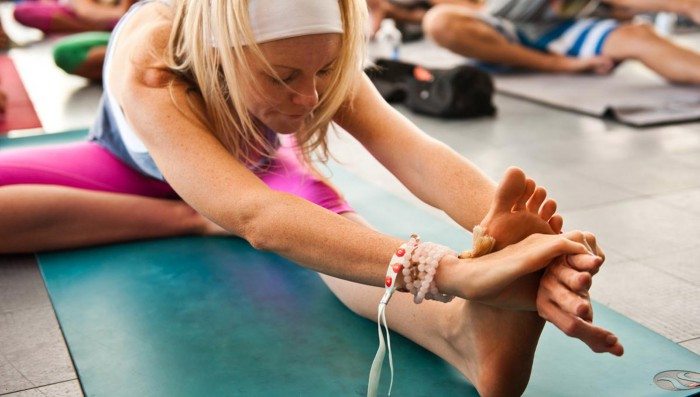
1. Flexibility is only half of what the physical asana practice is about
News Flash: You have to be strong to do yoga! Have you tried doing a Chaturanga push-up recently? Or any arm balance like Scorpion or Crow? These and so many other poses require insane core strength, highly developed back and shoulder muscles, and no need for flexibility.
What makes yoga such an incredible physical workout is the aim to achieve the perfect balance of flexibility, strength and patience. Flexible people need to work on strength so they don’t overextend and injure themselves. Strong people need to work on flexibility so they don’t muscle into poses and pull something.
Everyone has to work on the most vital ingredient: patience. The physical “point” of yoga isn’t to achieve flexibility. It’s to appropriately balance flexibility and strength in each of the poses, all while staying patient enough to let your practice develop over years (yes, years). So don’t beat yourself up if you feel like you’re not “good” at yoga right away. Yoga unfolds in the way that is right for you.
2. The physical asana practice is only part of what Yoga is about
The Yoga Sutras, the “Bible” of yoga, written by Patanjali in 400 CE, outlines the eight foundational principles of the yoga practice. Guess what? Flexibility is never mentioned, and the physical practice of yoga itself is only one of the principles. The other seven definitive principles of yoga focus on energy maintenance, mind discipline and meditation.
So if you’re thinking to yourself that you’re not flexible or strong, there’s still an entire world of yogic principles to explore. You can “do” many of them by just noticing your thoughts, sitting in a chair, and, yes, even relaxing in bed.
3. There are as many kinds of yoga as there are people
Poses of super flexible women doing handstand splits tend to get the most attention online, but there are so many types of yoga that have nothing to do with touching your toes or even going upside down. There’s Chair Yoga for people with physical limitations; Restorative Yoga, which is just like a giant nap; and Yoga Nidra, which is an actual nap. You could also incorporate yoga into your life by chanting, practicing gratitude, or just mindfully walking outside.
Bottom line: You may be doing yoga already and not even knowing it. So get curious. Find the style of yoga that can meet you and your body where you are right now. Have patience. And forget about needing a flexible body in order to start. All you need is a flexible mind.
Source: MyFitnessPal feed—by Brett Larkin for Wanderlust; Photo courtesy of Wanderlust | This post is part of Wanderlust and MyFitnessPal’s 28-day Run-Yoga-Meditate challenge. Whether you are new to one (or all three!) of these activities, join us to gain a healthier mind and body in less than a month.

I write like I think—fast, curious, and a little feral. I chase the weird, the witty, and the why-is-this-happening-now. From AI meltdowns to fashion glow-ups, if it makes you raise an eyebrow or rethink your algorithm, I’m probably writing about it. Expect sharp takes, occasional sarcasm, and zero tolerance for boring content.