






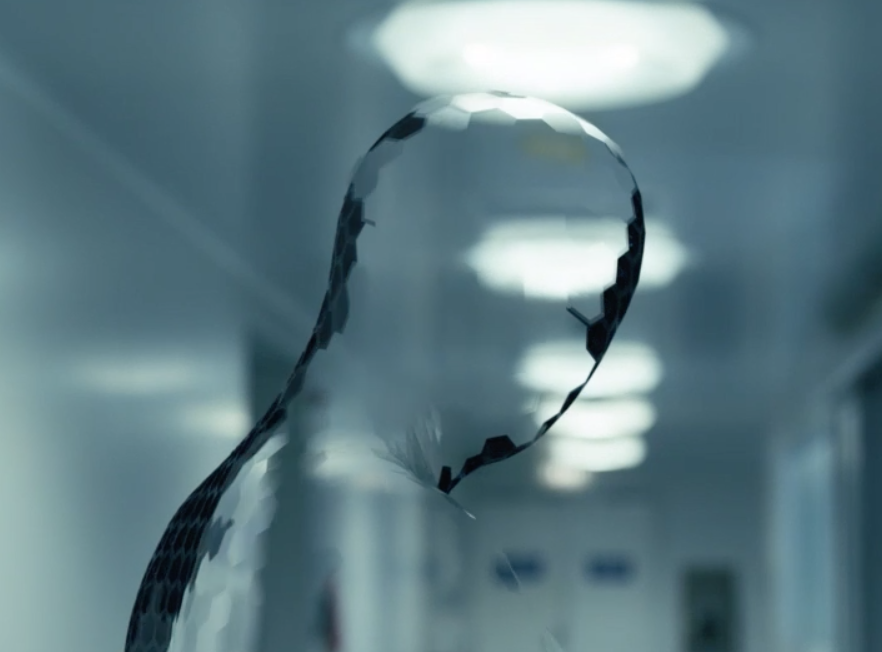
 Before you say, ‘been there, done that,’ you might give this fresh remake of a classic thriller a serious look. Penned and helmed by Leigh Whannell, his Invisible Man update explores a somewhat brutal aspect of unrequited romance. And unlike the recent remake, it doesn’t bore you with tech-speak or government conspiracies. Invisibility is simply a tool here—for white-knuckle torment and ultimately retribution.
Adrian (Oliver Jackson-Cohen) and Cecelia (Elisabeth Moss) live in a sterile ultra-modern oceanfront home. All angled steel and glass, it’s as cold to the touch as Adrian, who confines Cecelia to his narcissistic whims. He wants Cecilia to bear him a child. And he’ll stop at nothing to get his wish, including torturing her with impunity. Adrian, you see, is a Silicon Valley wunderkind who has developed an advanced optics technology that renders him invisible.

We’re introduced to Cecilia lying in bed in the middle of the night, trapped in Adrian’s embrace, struggling to make her escape. This tense opener has her rushing out of the house, through the woods, and into a car, just as Adrian wakes and tries to catch her. It’s a “you can’t escape me” moment all abused women fear, and it propels things forward with all sorts of nasty twists and turns.
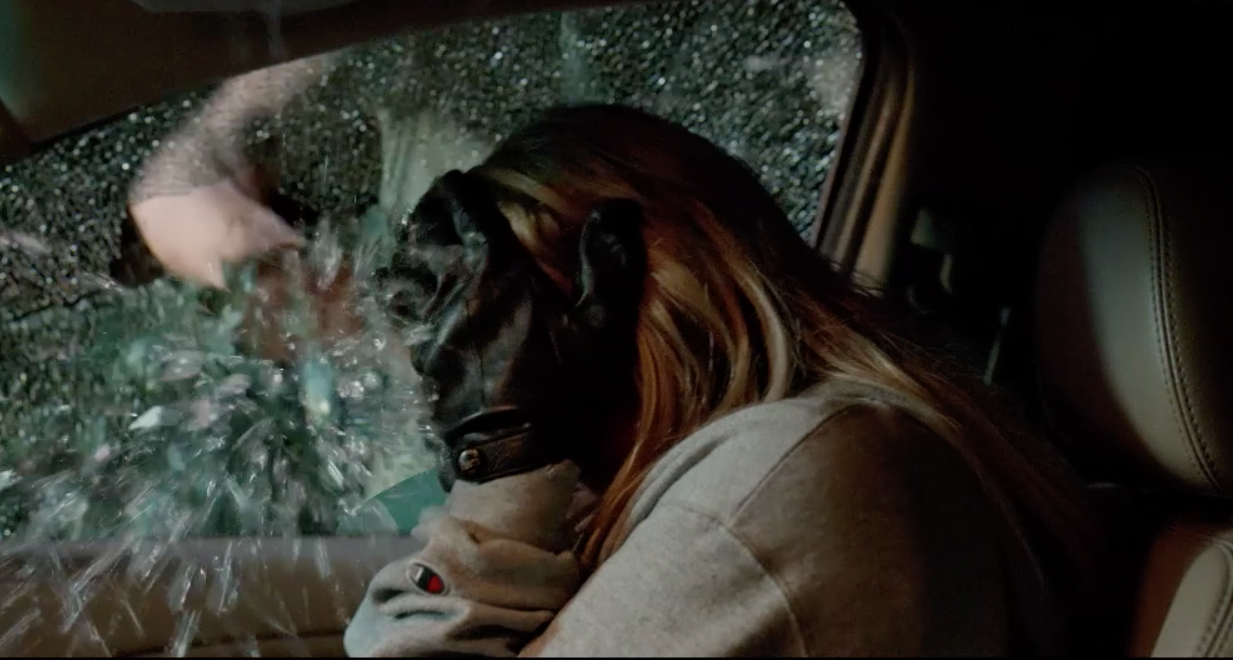
Cecilia’s sister (Harriet Dyer) arranges a safe haven in the house of close friend James (Aldis Hodge), who lives with his teenage daughter Sydney (Storm Reid). All is not well, of course, as Cecilia knows Adrian won’t give up. There are nail-biting moments as Cecilia thinks she hears things in the middle of the night, often sensing Adrian’s presence.
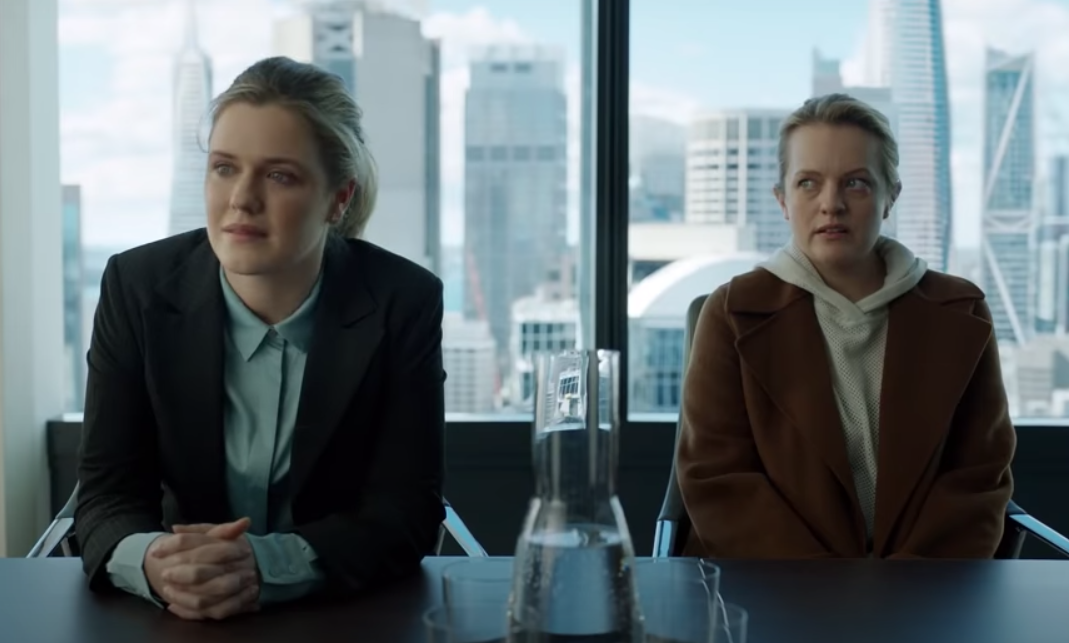
Cecilia breathes a guarded sigh of relief when she learns that Adrian has committed suicide. In a meeting with Adrian’s brother (Michael Dorman), she discovers that Adrian has left her a small fortune. Regarding this as too good to be true, Cecilia senses evil strings attached to this gift. Taking things at face value, James and Sydney celebrate Cecilia’s good fortune. And Cecilia rewards them for their sanctuary by offering to pay for Sydney’s college.

Whannell ratchets up the suspense at this point, placing Cecilia in all sorts of uncomfortable situations. Tight shots of dimly lit, empty corners and hallways create a jump-scare ambiance that’s quite unsettling. By the film’s title and Cecilia’s reluctance to accept Adrian’s death, we know she’s being watched and followed. The genius is this approach is that we neither hear nor see anything (well almost). Whannell lets our imagination do much of the work and provides clues that all is not right—suspicious breezes, doors creepily ajar, a knife falling, and a pan fire in the kitchen. (When Sydney snuffs out the flames with a fire extinguisher, we get the hint that it’s the first weapon Cecilia will use to confront Adrian.)

Moss does an admirable job as a woman tormented at every turn, emoting despair, rage, and revenge with a ferocity that brings Cecilia to life. She leaves nothing to chance as she delivers an emotionally nuanced virtuoso performance. Her struggle is universally relatable and gut-wrenchingly palpable as the stalked woman no one believes.

When Adrian uses his invisibility to cloak all manner of devious deeds, implicating Cecilia, protests of ‘Adrian did it! He’s invisible!’ fall on deaf ears. After being committed to a mental institution, Cecilia eventually takes matters into her own hands. But even here, there are delicious turns that keep you guessing.

The finale is at once satisfying and shocking in a Dirty Harry street-justice sort of way. Moralists may decry the ending, but most abuse victims will nod silently in approval.

Alex A. Kecskes is a published author of "Healer a Novel" and "The Search for Dr. Noble"—both now available on Amazon. He has written hundreds of film reviews and celebrity interviews for a wide variety of online and print outlets. He has covered red carpet premieres and Comic-Con events for major films and independent releases.