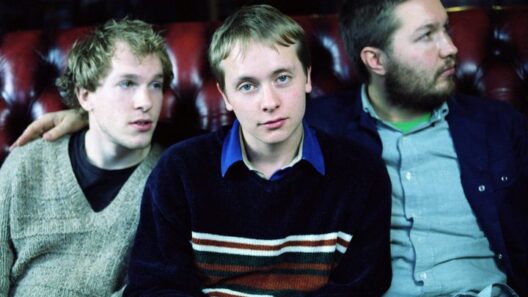



Written and directed by David Mitchell, The Myth of the American Sleepover takes us back to the Wonder Years of John Hughes and Richard Linklater, putting teens and those still longing to find their best teen years under a microscope. In Myth, four young people searching for love, acceptance and inescapable boredom, each step up to new plateaus of self-discovery in their last weekend of summer. In this insightful one-on-one interview Mitchell reveals what drove him to make this film and the various casting and cinematic techniques he employed to add a fresh new look to the teen self-discovery genre.
What was it like directing Myth, your first feature?
Doing an independent film and putting things together is a challenge. I’ve done quite a few short films and I sort of understood the tone that I wanted to convey in this film. But going from a 10- or 20-minute short to a feature is a huge difference. A lot of it is just the physical act of that much filming, maintaining the energy level and keeping track of where you are from scene to scene. It was scary when we started, but after we got going, I was pretty confident about what we were doing.
When you got the idea for Myth, did it evolve slowly or did it all come to you at once?
I had done a lot of short films that were a mixture of autobiographical and stories that had this particular tone. I wanted to do a feature version of those films, and I thought that this would be a nice backdrop and structure for telling those stories. There seemed to be something iconic about it. I had all the main characters early on in my mind and I slowly developed their stories. They were all there by the first draft. I did have to further define all the extra characters. There was a point when the script was longer, with a number of extra characters and small, branching storylines. I had to trim some of that in the writing stage because we made this film for very little money. We knew that what were setting out to do was huge, so I tried to cut a few things.
The casting is absolutely perfect in this film. What were you looking for in your actors?
It was always our intention to find new actors. A year before production, we put the word out through community papers and used word of mouth to let actors know that we were casting for this film. We held the casting calls ourselves and we just read everyone. I was looking for a certain amount of screen presence and natural charm. It was satisfying to find them and to match them up to the different roles. Actors at this level usually don’t carry a movie, but it worked.
Were you influenced by John Hughes (Breakfast Club), Richard Linklater (Dazed & Confused)?
I’m a huge film buff. The number of influences and films that I aspire to is long. The big influence for me structurally was American Graffiti. I also like Dazed and Confused, 16 Candles, and Breakfast Club. Those films are burned into my brain.
Why did you choose so many delightful, dialog-free moments to explore Maggie (Claire Sloma) emotions?
That’s the thing I wanted to bring to this film. I sought to make a film in the teen discovery genre, but I also wanted something that would reflect my own personal style. I love conveying things visually. That’s what film does so well. I wanted to suggest emotion and tone through point of view and by placing the viewer in these spaces. There’s something visceral about placing the viewer in the backyard hanging out with friends, riding a bike down a suburban street on a lazy summer day. These are things that bring back memories for the viewer, and they can sometimes be more effective than a lot of dialog.

You mix characters of innocence with more worldly high school seniors and grads, each with their own moments of self-discovery. Why did you choose to mix these archetypes?
There were a lot of different stories I wanted to put into this. I felt if I presented characters in different stages, it would add some depth to the journeys that some of the younger characters were going on. Seeing what was happening to the younger characters would add perspective to Scott and some of the older characters. For me, mixing them made it a stronger film.
Why did you choose Maggie as the transitional character, a girl that wanders from the girls’ sleepover to a guy’s party?
When I started writing the script, she was the first character that I started working on. Her spirit and sense of adventure was fun and it sort of drives the film. I felt the audience could start with her and that she could take us through this journey. I don’t know if there’s a main character, but if there were, it would probably be Maggie.
When Maggie does her dance routine in front of partygoers, what were you going for here?
I thought it would be really fun to put a dance sequence in this little indie movie. I like a lot of the 40s and 50s musicals. I love the feeling that you get from those scenes, so I thought, why not put it in here? I tried to not be afraid of putting things in the film that I enjoyed, even if tonally, it wouldn’t be a director’s first choice. I wanted to stretch the boundaries of what people imagine this kind of film would be.

What is Claudia (Amanda Bauer) looking for in this film?
She’s just trying to figure out her place, to discover the person she is, the friends she wants to have and where she fits in. Her storyline is a bit more subtle and internal than Maggie’s. She has a lot of options and possibilities for friendships. I wanted to show the social layers, the social stratosphere that Claudia found herself in. And how she moves through it.

Rob (Marlon Morton) spends the night searching for Avalina (Madi Ortiz), but she’s not what he expected in “the tunnels.” What were you telling the audience here?
The spark of that is sort of my American Graffiti homage. Even the moment when Avalina passes by in her mom’s car, there’s a little hint of that. It’s showing that there are things that we long for, and that we occasionally find those things, but we discover that they’re not what we expect or want.

Before Scott (Brett Jacobsen), goes all out to pursue twins (Nikita and Jade Ramsey), he’s watching what looked like the two tiny twins of Shobijin in Mothra on TV. Why did you include that?
It’s funny, we actually shot that ourselves to make it a kind of movie within a movie and to be able to connect it to what he’s going through. I love Japanese monster movies and I just thought it would be fun to have him see twins as he thought about Ady and Anna who he had a crush on in high school. While there’s something fairly deep about what he’s going through, there’s also an element of comic relief there too.
There’s no texting or slang that contemporary teens can identify with in Myth. Why did you remove any time-stamp identifiers and make Myth more universal?
We wanted to do something that was fairly timeless. I felt if you put too much specific technology into the film that it does timestamp it. Like, “I see there’s an iPhone 4.” In mixing production design and different elements from different eras, the hope is that you don’t know exactly when it is, but it might feel like your childhood or things that you remember. I didn’t want to alienate a specific audience and I wanted to maintain the kind of dream-like feeling the film has.
What’s your next project?
The next project will be tonally similar. It’s called Ella Walks the Beach. It’s about a young woman in her 20s. In the beginning of the film, she breaks up with her boyfriend and she goes out with some friends to a California beach party on the 4th of July. We just follow her for a night and day as she wanders around the beaches by herself. She has little adventures and conversations with strangers. Ella is the lead character and she interacts with a ton of other characters in the film. It’s an ensemble piece, but it has one main storyline. There are some really wonderful characters that she comes across. It’s not so much a coming of age film—though we see that aspect of her character in her first love when she’s younger. I’m really excited to put this one together and cast it. The film is written, and we’re basically putting the film together now—casting, etc. We’ll be trying to shoot it in the Spring. I also have a horror film and several other coming-of-age scripts that I’ve written.

Alex A. Kecskes is a published author of "Healer a Novel" and "The Search for Dr. Noble"—both now available on Amazon. He has written hundreds of film reviews and celebrity interviews for a wide variety of online and print outlets. He has covered red carpet premieres and Comic-Con events for major films and independent releases.