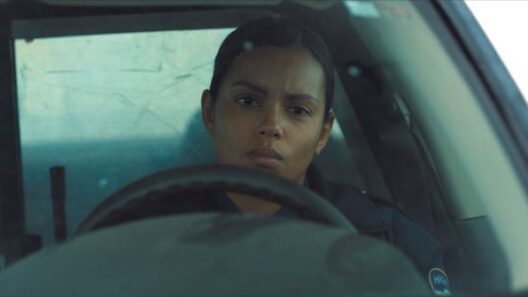




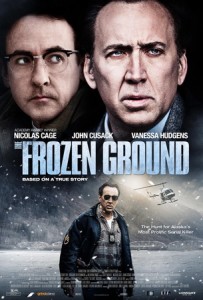
 Inspired by the incredible true story of Robert Hansen, the serial killer who terrorized Anchorage, Alaska, The Frozen Ground follows Alaskan State Trooper Jack Halcombe (Nicolas Cage) as he sets out to end Hansen’s 13-year murderous rampage of street girls. Risking his life, Halcombe goes on a personal manhunt to find Hansen (John Cusack), before the next body surfaces. When Hansen’s next victim, 17-year old Cindy Paulson (Vanessa Hudgens) manages to escape, she agrees to help Halcombe catch her tormentor. In this one-on-one interview, writer/director Scott Walker reveals the challenges he faced in bringing his first feature film to life.
What attracted you to this story?
Scott Walker: I was attracted to the relationships and less in doing a story about a serial killer. I was much more interested in doing a story through the eyes of the victims and their families. There were so many ways you could tell it, but what appealed to me was to view this case as though you were one of the real people dropped in the middle of it, with more questions and no answers. We’re taken through that through this fragile relationship between a young girl who has learned never to trust anyone, let alone any officers, and a cop who doesn’t work in a city, but a trooper who works in the vast wilderness. He’s brought into the city and tries to gain her trust.
Did you draw from police files for the factual elements of the story? Or from previous documentaries?
Scott: I had a court researcher get me all the court and police files on the cases, as well as the major cases they used to convict Hansen. Then I had a journalist researcher in Alaska find every piece of media that ever covered any of these cases. That gave me enough background to bring in some of the people involved. Then over the course of a year, through interviews with DAs and state troopers, I got many of my questions answered. I also interviewed Cindy Paulson for about 50 hours about everything to do with her life. I felt that once I started on this research, I had this responsibility because these were such horrific events that affected so many people and left a mark on Anchorage and its families, leaving questions that will probably never be answered.
Did you add or embellish the story with any fictional elements?
Scott: To be honest, from Cindy’s perspective, I toned that down massively because I don’t think you could film everything that happened to her. I toned down a lot of what Hansen actually did because he did such horrific things. The biggest challenge was narrowing down the investigative team. There were so many cases over the 13 years that involved so many different officers from so many divisions—troopers and Anchorage police, literally hundreds of officers—so somehow I needed to bring that down. There would’ve been too many potential characters that would’ve left the audience completely lost. No one would have a relationship with anybody. For the most part, I wanted everything to be true of their lives, the experiences they had, and to follow as closely as possible, the police procedural the troopers were picking up, and to use as many of the victim’s real names, their events and circumstances as possible.
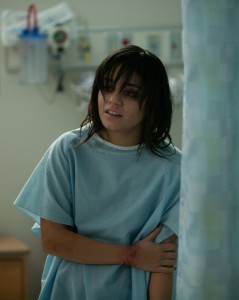
What did you see in Vanessa Hudgens that convinced you she’d be great as Cindy Paulson?
Scott: She came in when we were two-thirds through the casting process. By this time, I’d seen probably 80 actresses and we were down to 20 or 30 who were looking terrific. I was working with them, one-on-one to get down to the top three. I hadn’t spoken to Vanessa and hadn’t seen what she’d done. We had literally every agent in town wanting their 17- to 23-year old actress to come in and get the part. Vanessa came in and did three scenes, one of which was the Skateland scene. She came in and gave this phenomenal performance without me uttering one word before hand. She hit every emotional beat of the scene in which there were many. We were sitting there going, wow. We weren’t expecting that. She’s a phenomenal talent, so bright and bubbly. But she really wanted something that was heavy and gritty. I told her that we needed to send her far into the deep end to work with vice cops and to understand Cindy’s life. She didn’t back away from anything. She spent a lot of time with Cindy.
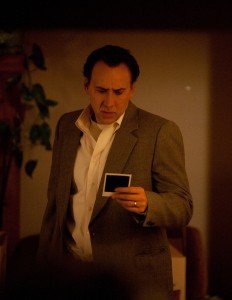
Why did you choose Nicolas Cage as Detective Halcombe and John Cusack as Hansen?
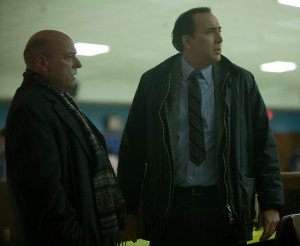
Scott: I’d watched Matchstick Men, Knowing and Kick Ass and in each of them, Nick had a young child actor. He has this phenomenal honesty and very paternal quality about his interactions with kids, and that was really important for me. Because the relationship between the cop and Cindy needed to be very honest, caring and paternal and not sleazy. That could’ve been another angle in the story–that something was going on between these two. The real cop that worked with Cindy genuinely cared for her and was really struck by how he could really help this girl. The cop didn’t want his name used. He just wanted to help tell the story. He asked that any monies owed him for his helping tell the story be donated to a children’s charity. So I wanted Nick to bring that character to life and he was terrific. As far as Hansen, I wanted someone who would be believable as a normal guy, who could get away with living in society, being a prominent businessman, having two kids, married for 18 years, yet for 13 of those years, committing these horrific things. My reservation was that whoever took on this role might really play it up, create a real villain. We both had a like-minded vision of exactly how we wanted this character to be portrayed—very understated, very normal.
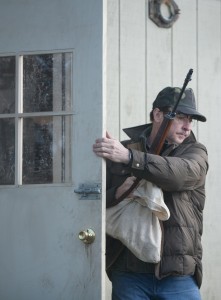
What were some of the major challenges in making the film?
Scott: Like most films, you’re up against time. We shot the film in 26 days. This being my first film, I wasn’t really aware of the time constraints. I would have loved to have had 35 days. Having to cut 50 scenes before we started shooting just to fit the schedule and still having to shoot 225 scenes in 26 days was pretty full on. And that’s where having the right cast and crew, all aligned and clear about what we’re going, meant that we could hit the ground running.
How difficult was it shooting in Anchorage?
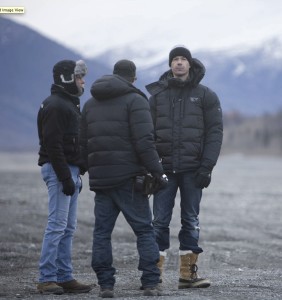
Scott: We had to deal with well-below-zero temperatures, 50-mile-per-hour winds and bear invested woods. Everyone thought I was crazy going there when it was snowing and sleeting, but it was an amazing adventure, so I think it paid off. The biggest challenge was a lack of equipment up there. We had four huge trucks, which were loaded in LA, driven to Seattle and put on barges for a full day, then set up in Anchorage. The other challenge was working within a certain window for snow. I wanted that feeling of no-snow to snow in the film. The day I needed snow, we got two feet. We were down to 6-7 hours of daylight per day.
What did you learn from Ordan’s Forest that you incorporated in The Frozen Ground?
Scott: Write a much better script. Ordan’s Forest was not meant to be a short film for anyone but me. It was my first experience with making a film–from writing the script all the way through editing and mixing. It was basically my film school. It taught me to have patience and to re-write and re-write. And if you keep doing that, the script will get better and other people will come on board and be able to help you.
The Frozen Ground will be available on demand August 23rd.

Alex A. Kecskes is a published author of "Healer a Novel" and "The Search for Dr. Noble"—both now available on Amazon. He has written hundreds of film reviews and celebrity interviews for a wide variety of online and print outlets. He has covered red carpet premieres and Comic-Con events for major films and independent releases.