
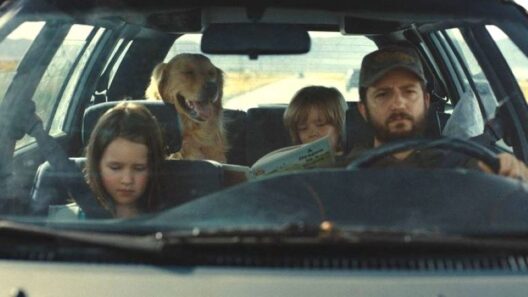



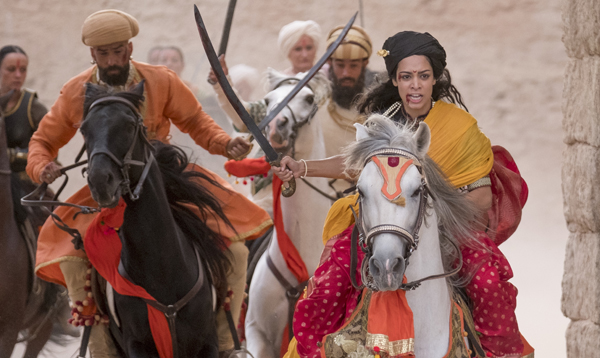

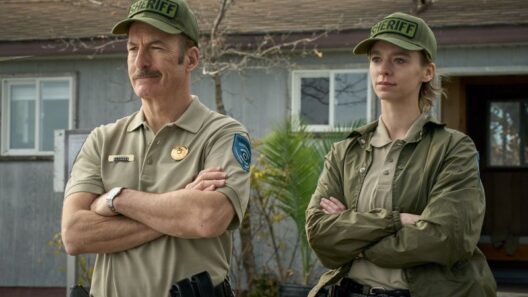
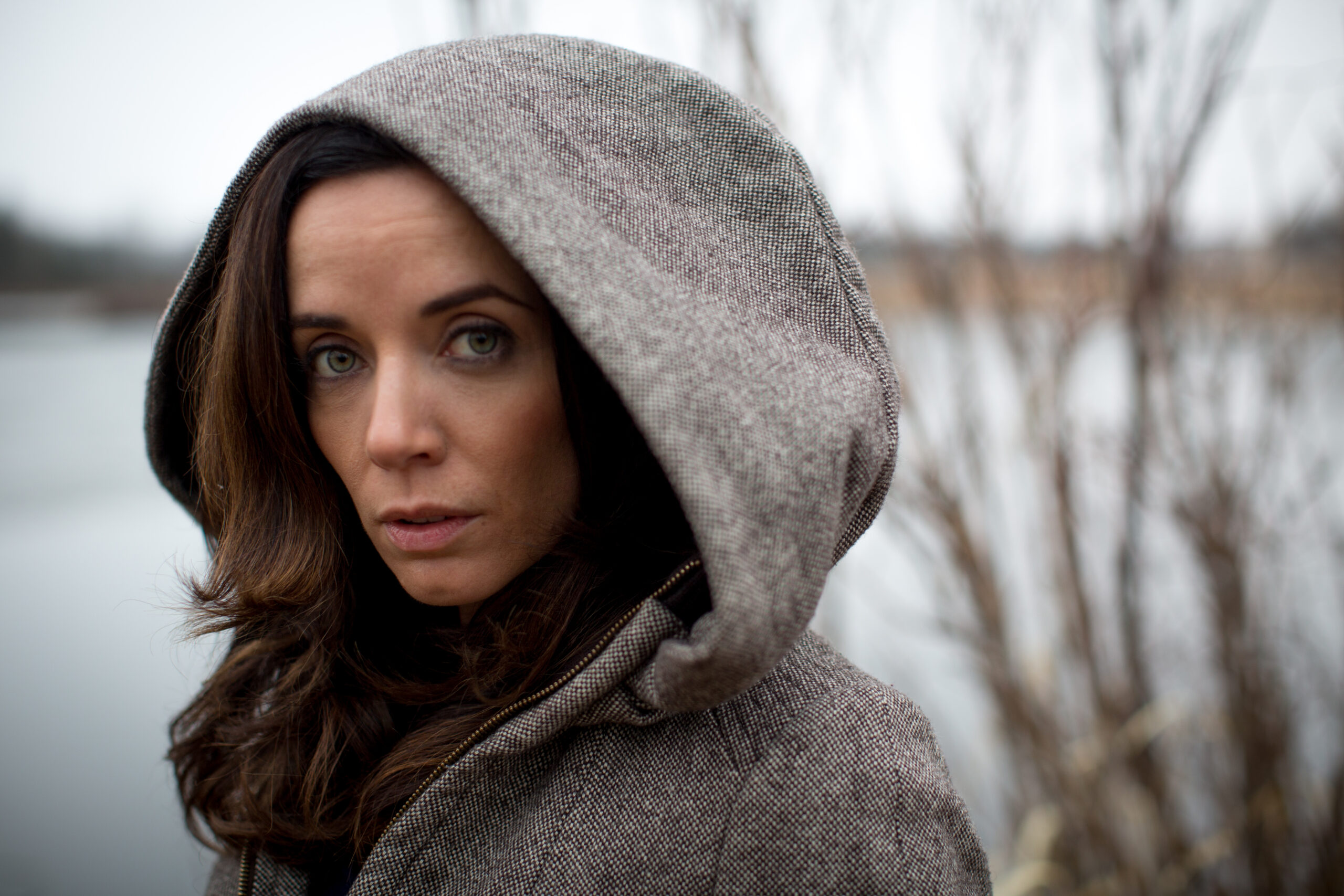
 Calgary born, and raised in Toronto and Vancouver, Michelle Morgan studied theatre and classical literature at the University of Toronto. “Stargate Atlantis” fans know her as Dr. Elizabeth Weir. She was also cast as Abigail in “The L Word” and as Debra Moynihan in “Diary of the Dead.” She went on to star on the hit CBC series, “Heartland.”
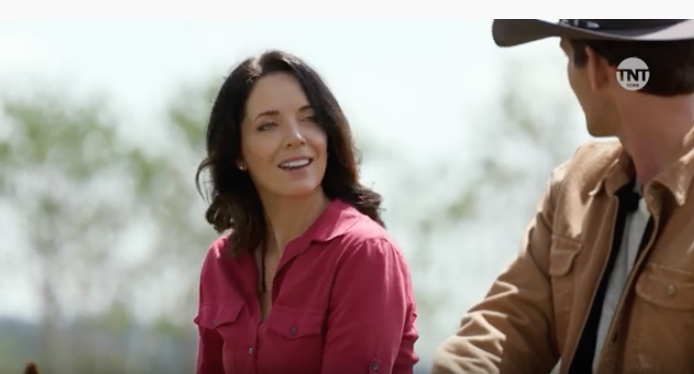
After 15 years of acting in film and television, Morgan is now also directing and writing. Her first short film, “Mi Madre, My Father,” was selected by Telefilm for the “Not Short on Talent at Cannes” for the Cannes Film Festival short film corner.
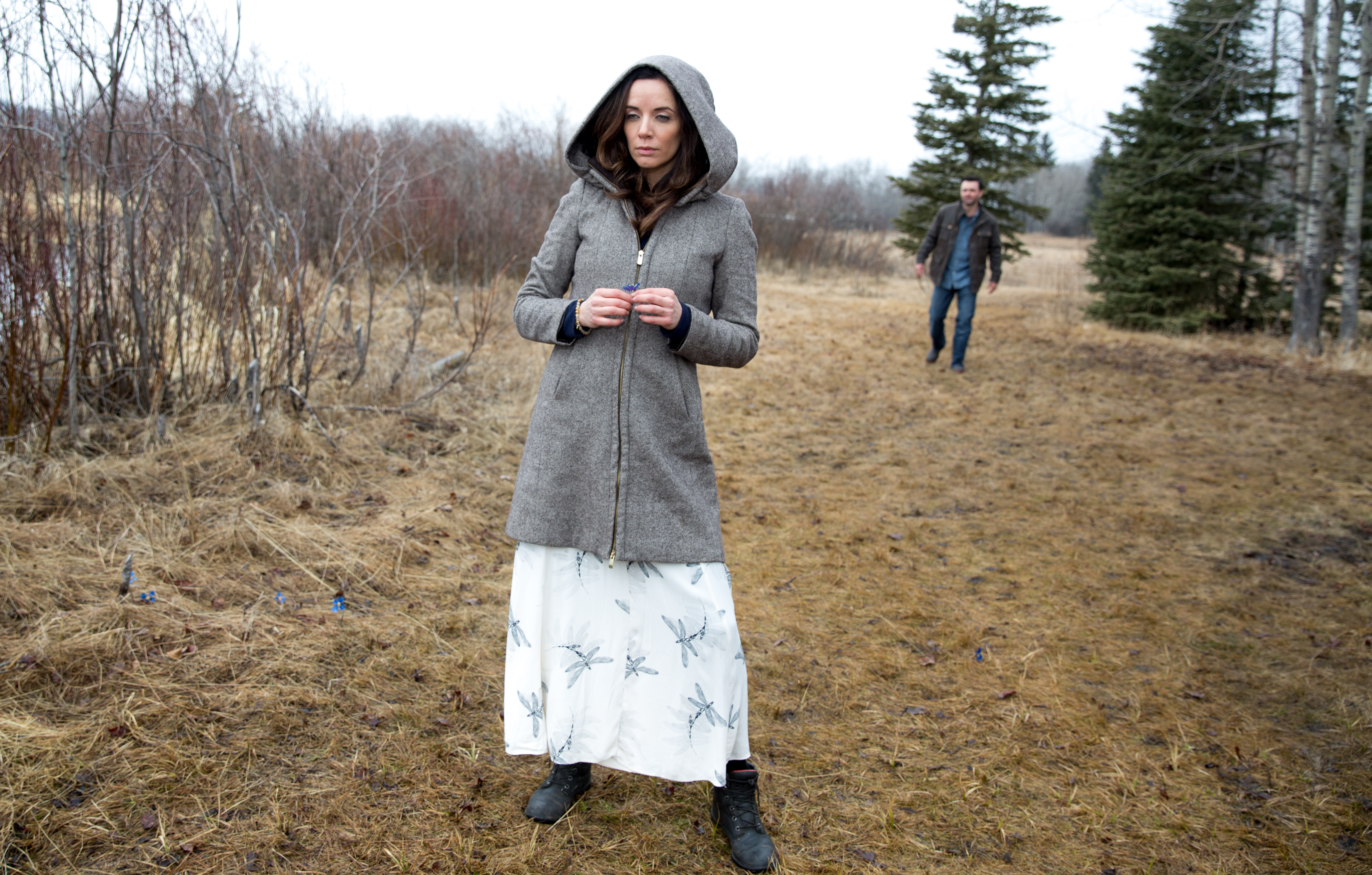
Recently Morgan directed three episodes of the new CBC digital series “Hudson,” a spin-off of the long-running series “Heartland.” She was selected to join the Women in the Director’s Chair, Story & Leadership Program where she will develop her feature film project, a post-apocalyptic western titled “The Plains.”

In the thriller “Ice Blue,” Morgan is Maria, the mother of a young home-schooled teen who is trying to sort out the lies and betrayal she confronts in a small Canadian town.

“Ice Blue” is a thriller about relationships gone awry. What drew you to this film and the character of Maria?
Michelle Morgan: When I first read the part, I wasn’t sure who she was or what her character was about. I knew she had some malicious intentions. But after a long talk with director Sandi Somers, I learned that the film was about family trauma and how it always comes back to haunt people who don’t deal with it. That really resonated with me. Maria embodies the trauma that doesn’t go away just because you ignore it. Family secrets do have a way of bringing themselves to life.
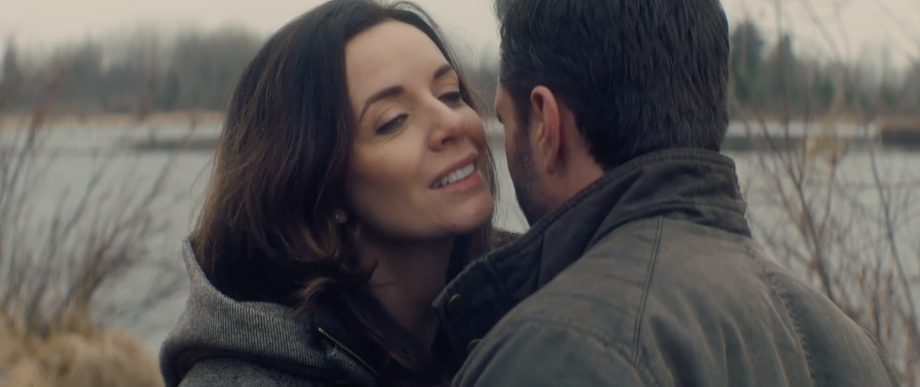
Did you audition for the role? If so, what was that like?
Morgan: I did. And like most actors who audition these days, I made a tape and emailed it over. They sent me sides. I was in Toronto at the time so instead of a callback, I had a Skype call with Sandi.
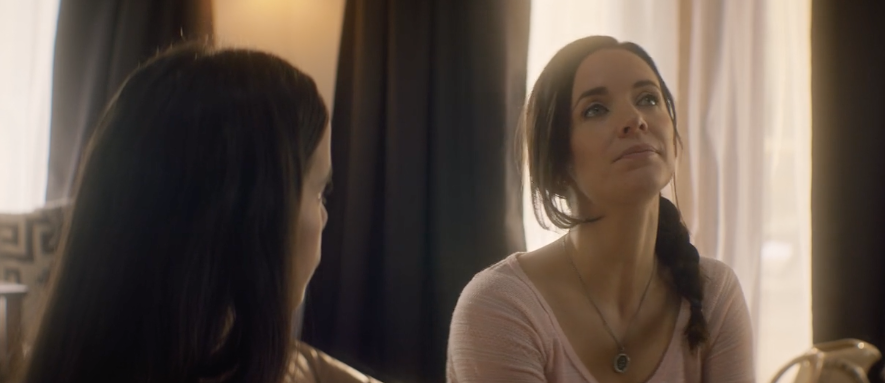
Maria is a troubled soul with a troubled daughter. What did you draw from internally and externally to bring your character to life?
Morgan: Maria is a mother and I’m also a mother. I had played mothers before becoming one. But once you have kids, it changes something inside of you. There are moments where Maria shows her maternal side. She is a spurned woman who has a difficult complicated relationship with her husband. Anyone who’s ever been in a relationship knows what it’s like when things become difficult. I often play people that are good, just, kind, and very giving. And I like playing those roles. But I also like playing people that are complicated and don’t always do the right thing. That’s more interesting sometimes.
What was the biggest challenge you faced in this film?
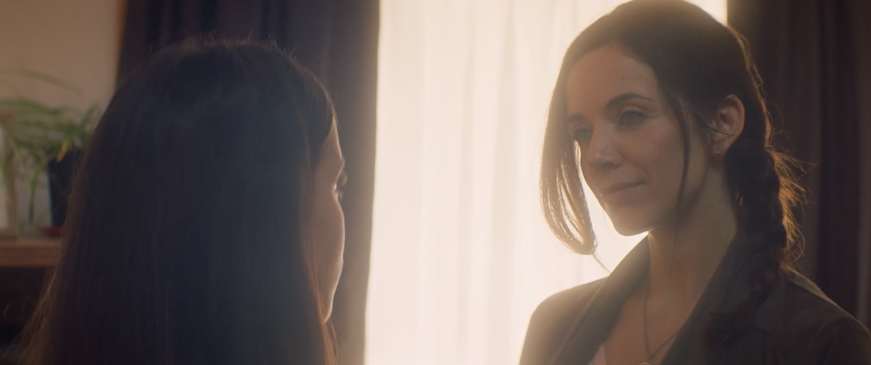
Morgan: We were shooting on this little lake by the foothills of the Rocky Mountains in Southern Alberta. But because we were there in the fall, the entire lake was covered in geese, which were so loud. We were doing these long dialog scenes and we couldn’t hear each other over the geese. But the biggest challenge was getting into Maria’s very dark intentions. Tapping into that is always challenging.

How would you describe your favorite scene?
Morgan: It would be the last time you see Maria toward the climax of the film. Working with Sophia Lauchlin Hirt and Billy MacLellan—it was the only scene where the three of us are together. The give and take of that scene, playing off both of them was really fun.

What do you see as the core message in “Ice Blue”?
Morgan: That trauma can’t be buried and ignored. And that trauma will come back to haunt you if it’s not dealt with in some way.
How are you like Maria and how are you different?
Morgan: As an actor, you bring yourself to a role. I can’t turn Michelle Morgan off. But when you’re playing a character, you have to humanize them and bring your own experiences to them. You’re creating a new soul. With every part I play, I sometimes try to bring a lot more of myself. But in this film, Maria is not me.
What film or actor inspired you to become an actor?
Morgan: I don’t think it was a particular film or actor. I enjoyed doing theater in school and growing up performing. I was lucky that in my school, I was able to be in plays, I did improv, and Ioved making people laugh.
If you hadn’t pursued acting, what career path would you have followed?
Morgan: I almost went for a master’s degree in journalism. I had been accepted at the University of British Columbia. I do like writing and I’m comfortable in front of the camera.
What do you say to a young actor just starting?
Morgan: It’s so hard because people always ask successful actors that question. I think they should also ask actors who haven’t made a career out of acting. Some people are naturally called to acting and storytelling. You have to do your homework. It’s not enough to be young and confident. You’re not always going to be young and you may not always be so confident. You need to train and learn from all the masters that came before you. So when your confidence falters and you’re not 22 anymore, you’ll still have your craft.
What can you tell us about the TV series “Deep Six”?
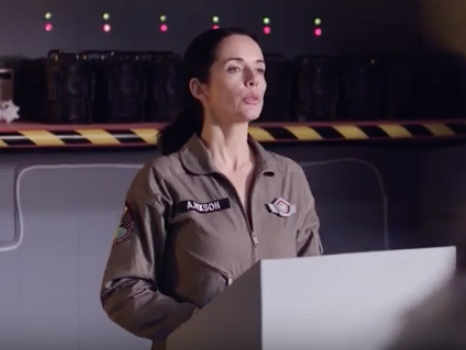
Morgan: Wow. That’s a very interesting production written and directed by Davin Lengyel. He used crowdfunding very efficiently to create a series set in the near future about deep space and first contact. I play Athea, a pilot and a scientist. The series is as scientifically accurate as possible. They looked at the latest space exploration technology in getting humans into deep space. And once, humans found a place to settle, how would they build a base? And what would first contact possibly look like? “Deep Six” is now available on iTunes.

Alex A. Kecskes is a published author of "Healer a Novel" and "The Search for Dr. Noble"—both now available on Amazon. He has written hundreds of film reviews and celebrity interviews for a wide variety of online and print outlets. He has covered red carpet premieres and Comic-Con events for major films and independent releases.

