






 What could a person do when subjected to bursts of violent messaging that last one-three-thousandth of a second? Subliminal mind control forms the crux of “Distorted,” a film that snails to a start then sprints to a heart-pounding climax.
Riddled with guilt over her son’s accidental drowning in a bathtub, 32-year-old Lauren Curran (Christina Ricci) is in therapy and taking antidepressants. For a new start, she and her husband Russell (Brendan Fletcher) move into The Pinnacle, a state-of-the-art apartment. Not since “Sliver” has an apartment been so odiously intrusive with sensors and black-dome cameras monitoring one’s every move. But, hey, it’s got scented elevators, a fancy gym, a theater and feng-shui ambiance.
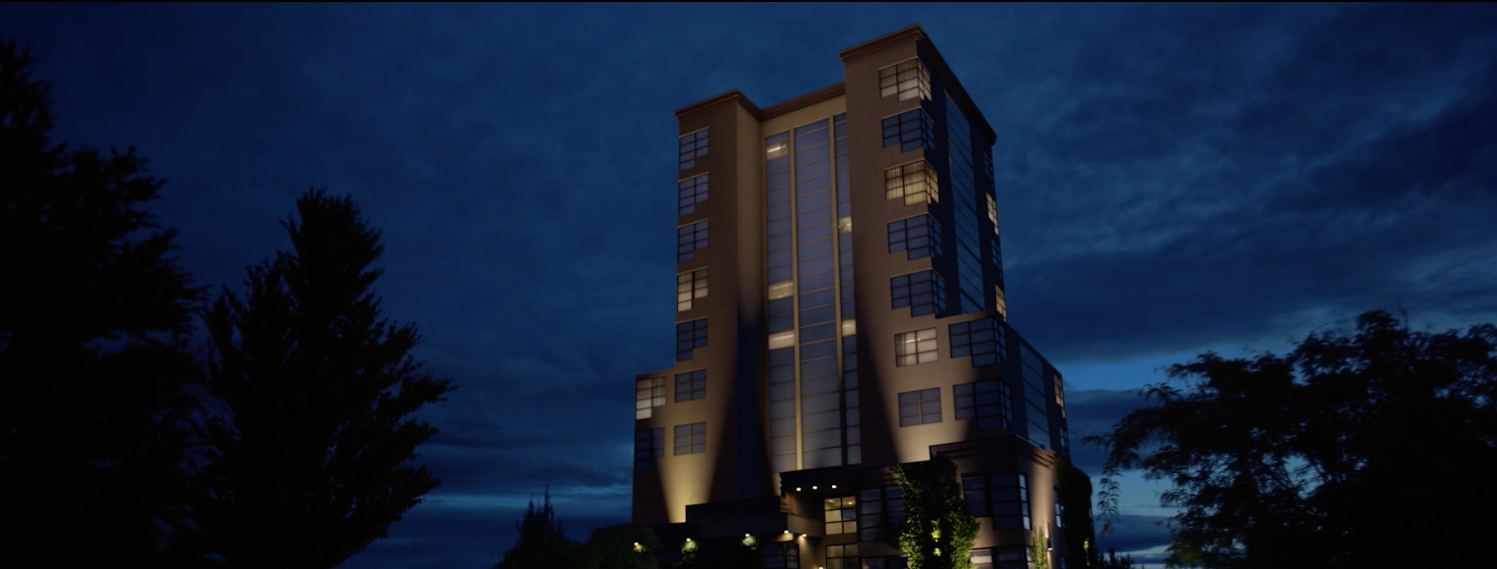
Initially, we’re not quite sure if Lauren is letting her troubled mental state run wild. We see her taking meds and we share in her nightmares. But the strangest things keep popping up in this enclave of ‘security and serenity.’ For one, the residents are a little too friendly and somewhat creepy. Like when Tim Hoyle (Scott Olynek) appears menacingly face-close through a door peephole and later announces, “I’m not one of them.” Okay, not one of whom, exactly? Then there are the omnipresent speakers hissing something and those disturbingly subliminal messages on TV (all without those special sunglasses used in “They Live”). One depressed resident takes a flying leap off The Pinnacle’s rooftop, witnessed, of course, by poor Lauren.
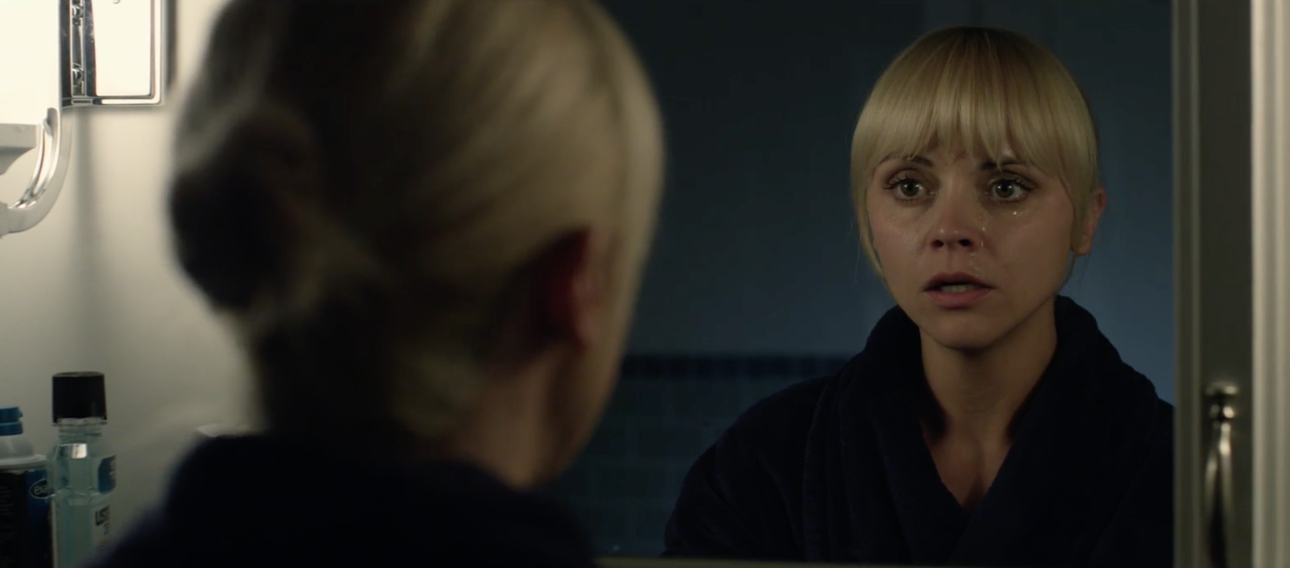
Director Rob King keeps his actors and action tightly under control so as not to wander into B-movie territory. And Ricci is convincing and sympathetic as a troubled woman trying to figure out what’s going on—all while coping with a devastating loss.
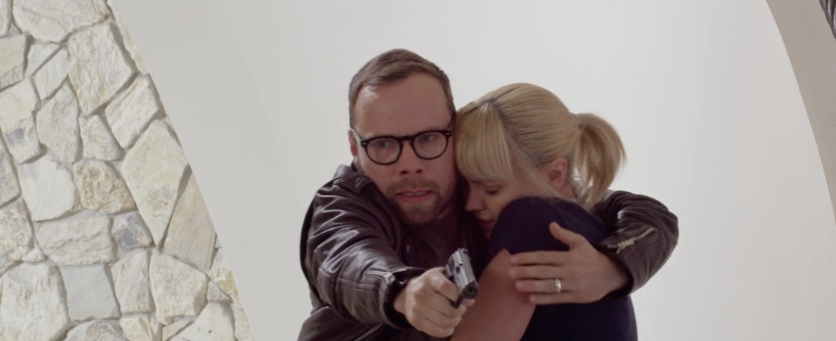
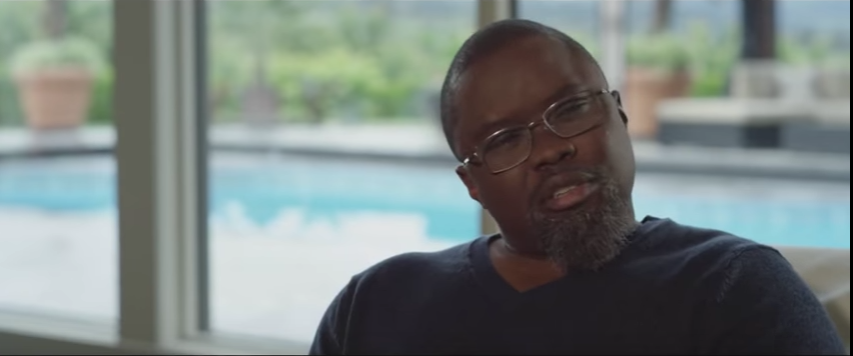
As is typical in these ‘wives failing to cope’ films, Russell keeps dismissing Lauren’s apprehensions about what’s really going on. He goes so far as to set up a hidden micro camera to prove she’s imagining everything. The binaural sounds and coercive TV flashes finally have Lauren running to her therapist, who tells her, “You’re still grieving and healing.” It doesn’t take long for Russell to suggest she needs hospitalization. Convinced something’s awry, Lauren turns to resident adman millionaire Phillip Starks (Vicellous Shannon). He offers a brief but persuasive explanation of subliminal messaging as basically unproven science. Shannon provides the gravitas of a media expert you initially trust.
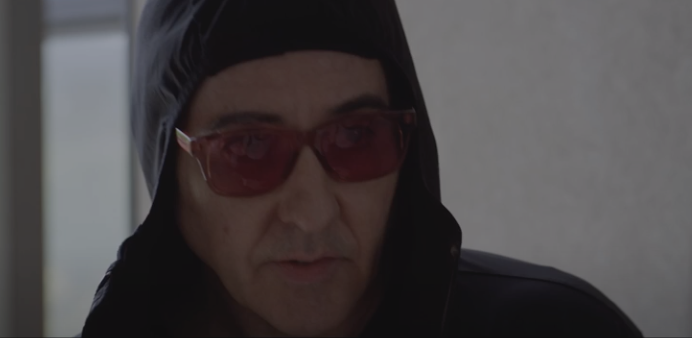
Driven to near madness, Lauren finally connects with hoody-wearing computer hacker/journalist Vernon Sarsfield (John Cusack). Initially, he comes across as a tin-foil-hat-wearing global conspiracy nut. But he does offer her insights into the bizarre world of subliminal science. He emails her encrypted documents that go into pulsed EM fields and covert hypnosis. When they finally meet in person, he informs her that her natural condition has her “operating outside of The Pinnacle’s tech.” He advises her to stop taking anti-depressant drugs, which make her vulnerable to mind control. It’s a catch 22, too little meds and her depressive psychosis takes her back to her son’s tragedy; too many meds make her vulnerable to The Pinnacle’s messaging. “We’re in a mind-control arms race with the Russians and wealthy ‘cybernated’ marionettes controlling our actions,” explains Vernon. Cusack, while performing a notch above cameo level, is convincing as the film’s anti-government hooded tech warrior.
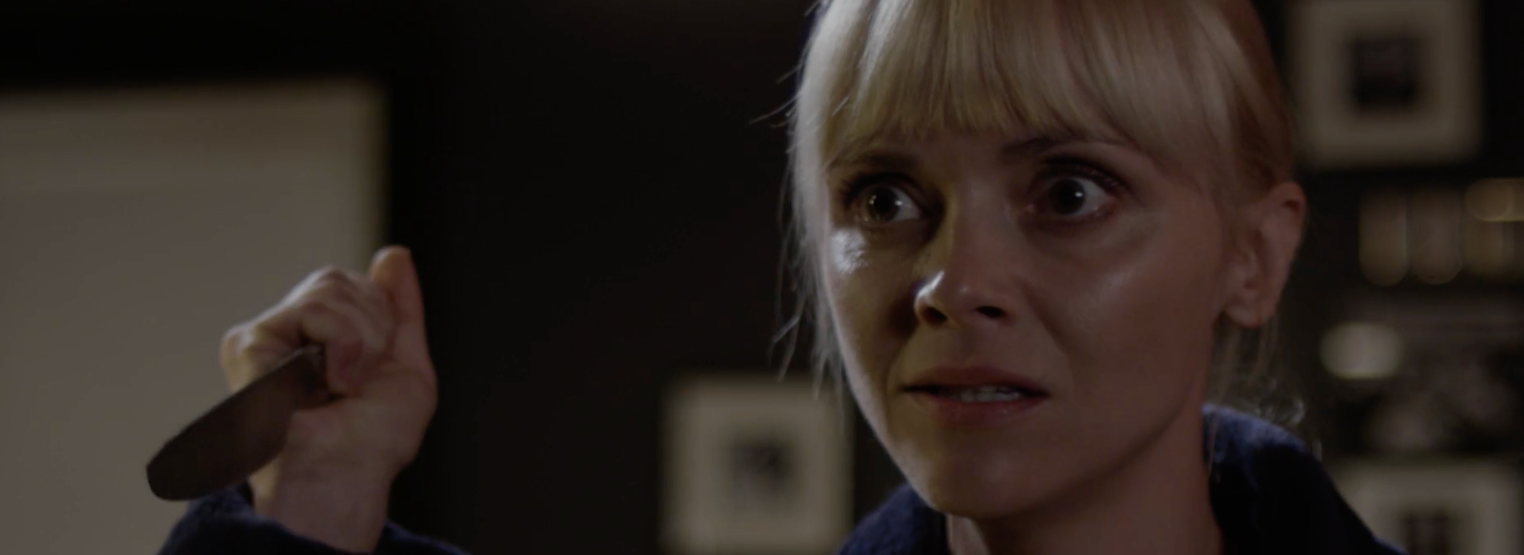
Eventually, Veron provides her with detailed blueprints of The Pinnacle and urges her to get physical evidence. And Lauren does just that, breaking into a subterranean room filled with closets of military-grade servers. While attempting to leave with the evidence, Lauren is attacked and injected with a sedative in the parking garage. She wakes up tied to a chair, her head locked in a medieval-looking harness. She’s then forced to view a full spectrum of subliminal images.

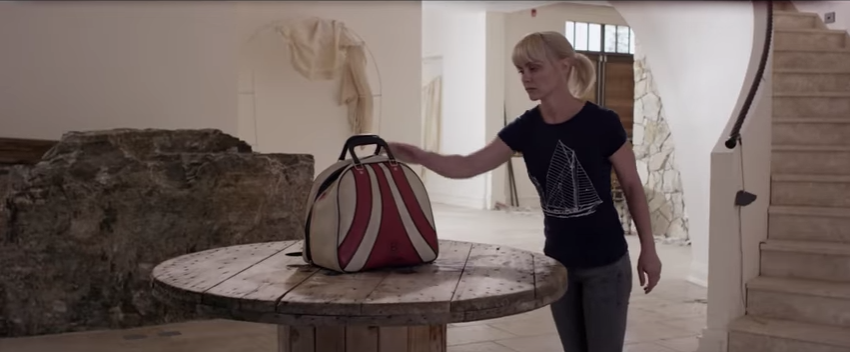
Released from her captors, she kidnaps little Ali (Sophia Daly) and takes her to an abandoned building. Will she succumb to the messages that order her to do the unthinkable to Ali? Arriving at an abandoned hotel with a bowling ball bag, she confronts Starks and six architects of The Pinnacle’s mind control program. “You can’t fathom the contribution you’ve made,” says Starks. “Psycho-technology is the new arms race. The holy grail of global sovereignty.“
King moves through Arne Olsen’s script with a steady hand, inching us closer to what we suspect is more than just Lauren’s paranoia. The sound design is well suited for this film with deep, foreboding subwoofer tracks and heartbeat thumps. There’s also the ubiquitous score of ‘Beautiful Dreamer,’ hauntingly played and hummed by residents who have succumbed to The Pinnacle’s mind control. The cinematography evokes a coldness and sense of isolation in buildings, landscapes, and sterile white-lit hallways. Freakishly bizarre paintings add to the unsettling ambiance throughout the film. A note to sensitive viewers: The flickering rush of violent control images in this film may be disturbing enough for some to shut their eyes.
The “Distorted” finale is both satisfying and unexpected as it moves from sheer terror to its inevitable conclusion. Conspiracy theorists will love it. For the rest of us, it’s a fun ride.
Check out the trailer.

Alex A. Kecskes is a published author of "Healer a Novel" and "The Search for Dr. Noble"—both now available on Amazon. He has written hundreds of film reviews and celebrity interviews for a wide variety of online and print outlets. He has covered red carpet premieres and Comic-Con events for major films and independent releases.