


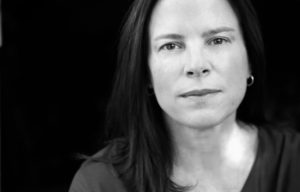
Nicole Hirsch Whitaker graduated from the NYU Tisch School of the Arts with a Bachelor of Fine Arts degree and subsequently began her career as a still photographer. Over the last 20 years, Nicole has worked across all mediums, from fiction and nonfiction to television and commercials.
Nicole began shooting ‘second unit’ on critically acclaimed feature films including Golden Globe-nominated Thank You for Smoking, Running Scared, Coach Carter, and Academy Award-nominated The Cooler. Her first unit credits include Rhino, Followers, Chasing the Blues, Bradford Tatum’s Salt, Amateur Night, American Whore, On The Doll.
She earned an Emmy nomination for the documentary Girl Rising and for Kurt Cobain: Montage of Heck. Most recently, Nicole shot episodes of Amazon’s critically acclaimed series Patriot and the first season of Are You Sleeping? She is currently shooting Our Lady, LTD, the upcoming neo-noir thriller series starring Ben Kingsley, Jimmi Simpson, Jacki Weaver, and Luis Guzmán.
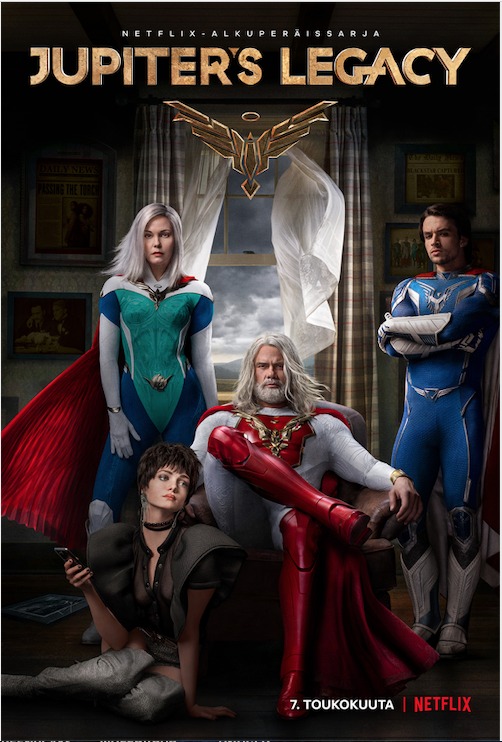
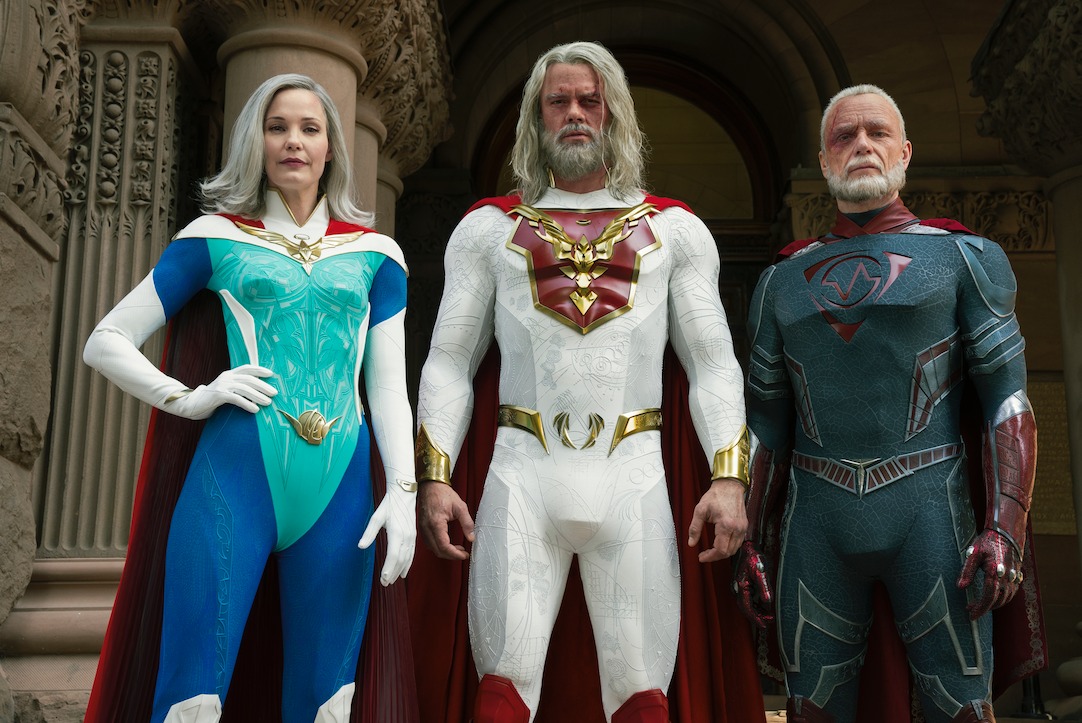
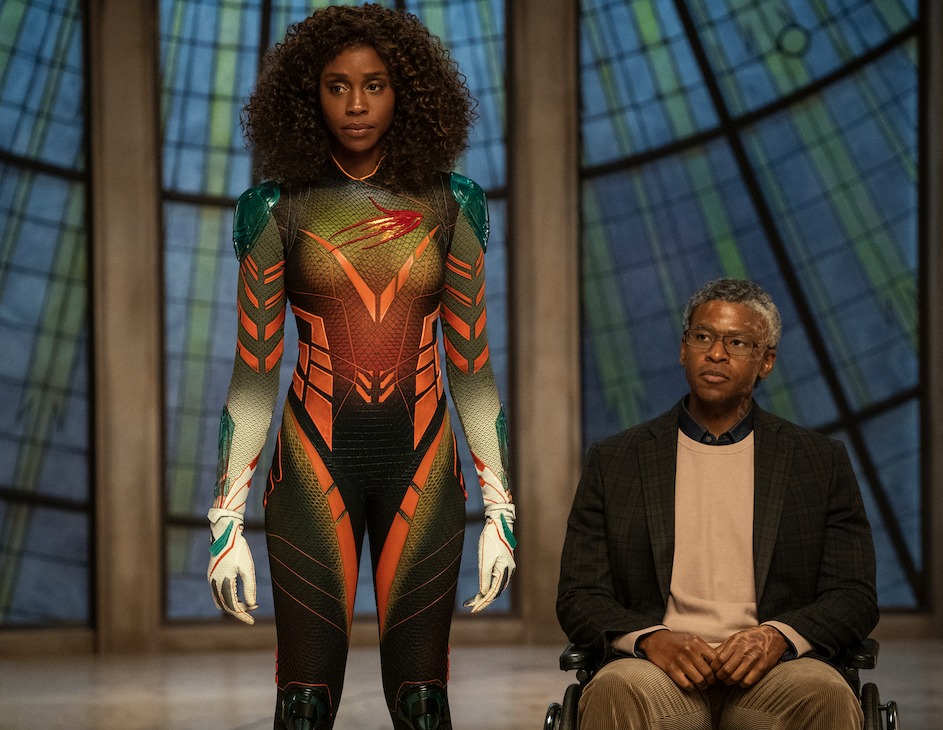
Nicole’s latest work as co-DP on Jupiter’s Legacy has premiered on Netflix. The superhero streaming television series created by Steven S. DeKnight is based on the comic book series by Mark Millar and Frank Quitely. Jupiter’s Legacy follows the world’s first superheroes, who have kept the world safe for nearly a century. Now their children must live up to their legacy in an epic drama that spans decades and navigates the dynamics of family, power, and loyalty.
Thank you for taking the time for this interview. What attracted you to Jupiter’s Legacy?
Nicole Hirsch Whitaker: I was approached by Steven (S. DeKnight) because he was a huge fan of Patriot, a TV series I’d worked on. He’d reached out to me and the other DP who had worked on the series to join him on Jupiter’s Legacy. I’d never done anything like this—a superhero big action series. I was surprised because it was pretty much the antithesis of Patriot, which was a grounded drama with a bit of comedy. Legacy sounded like so much fun and I loved meeting Steve. We got along great and I decided it was going to be a match made in heaven so I signed on.
Did the creative team storyboard most of the action scenes?
Nicole: Yes. We had four different directors who each expressed different things they wanted. I’d say 90 percent of the action scenes were storyboarded. And the front team, which had worked on the show for about nine months, did a lot of pre-vis work before we arrived on location to rehearse.
You used subdued sepia-tone lighting in many non-action scenes. What was your thinking there?
Nicole: We had two different lights. There was the modern-day light, which took place in the 2000s. And flashback scenes, where we went with a warmer de-saturated, gritty quality reflecting Kansas and Chicago in the 1930s. We used lighting as a storytelling tool to switch people’s heads into a different time.
ELENA KAMPOURIS (photo-by-STEVE-WILKIE NETFLIX)
It looks like you used CG and wirework to create really convincing fight sequences. What challenges did you face uniting these elements?
Nicole: We did a lot of work with doubles. Every superhero had a Digi-double. And we always knew that if we set up a shot, we would pre-vis where the wires would go. With the stunt team, we’d have to use cranes to lift them. We tried not to do too much with our first team actors. Every actor had a stunt double. And they looked incredible. For me, it was trying to figure out how to rig everything around the lighting and the shots that the different directors wanted.
In episode four, All the Devils are Here, you open with a strobe-lit dance sequence, followed by a time freeze. Any lighting and camera angle challenges in that nightclub?
Nicole: Yes. That was the first thing I shot. So when I got to Toronto, the director said, we’re going to this famous nightclub—which held like 5,000 people. And we only had 150 extras. We talked about creating layers and foreground elements with lighting to make it feel like the place was packed. Chris Burns directed that show and he’d worked with Howard, who was a laser genius and had done tons of rock ‘n roll shows. So we did a lighting test and prep day with all these lasers. But lasers are not good for people or cameras, so we had to be safe when using them. But they were great in creating a sense of depth in the space, which made it feel like there were a lot more people in the club. We also used lasers for that time freeze scene. It was my first day and they kind of threw me into the fire (laughs).
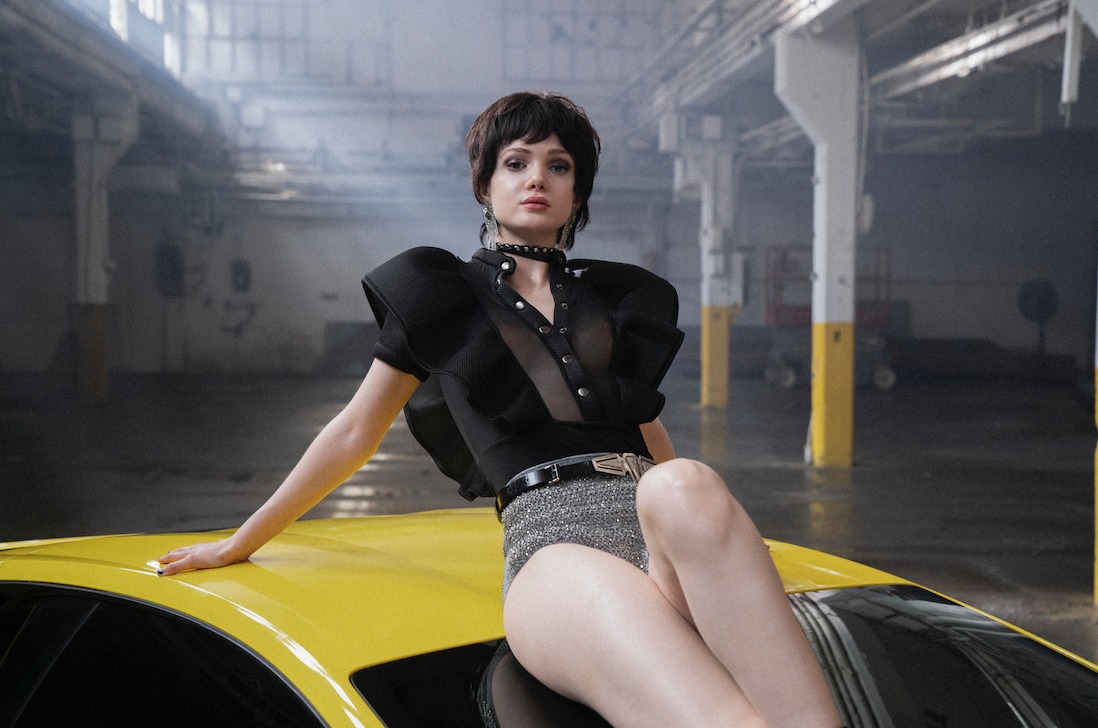
Chloe’s modeling shoot had a lot of fast cuts and rotates, ending with her tossing the car through the air. How did you make that look so realistic?
Nicole: That was a really fun shoot with three units. One unit shot close-ups of Chloe (Elena Kampouris). We had no green screen that day but we had a green car made out of foam that she lifted in the air. Everything else was done in post. But it was mostly CG, though we had small elements of the car that we used. The scene was beautifully storyboarded by our director, Chris (Christopher J. Byrne). Our incredible visual effects team was in-house, with Jim Mitchell, our visual effects supervisor, Paul (Russo), Wes (Wesley Sewell), and Christina (Graff). We’d meet every day and did lots of prep on shoot days. One effects person was always with us. So if we had any questions, they’d be right there to figure it out. All that support made for a much more enjoyable experience.
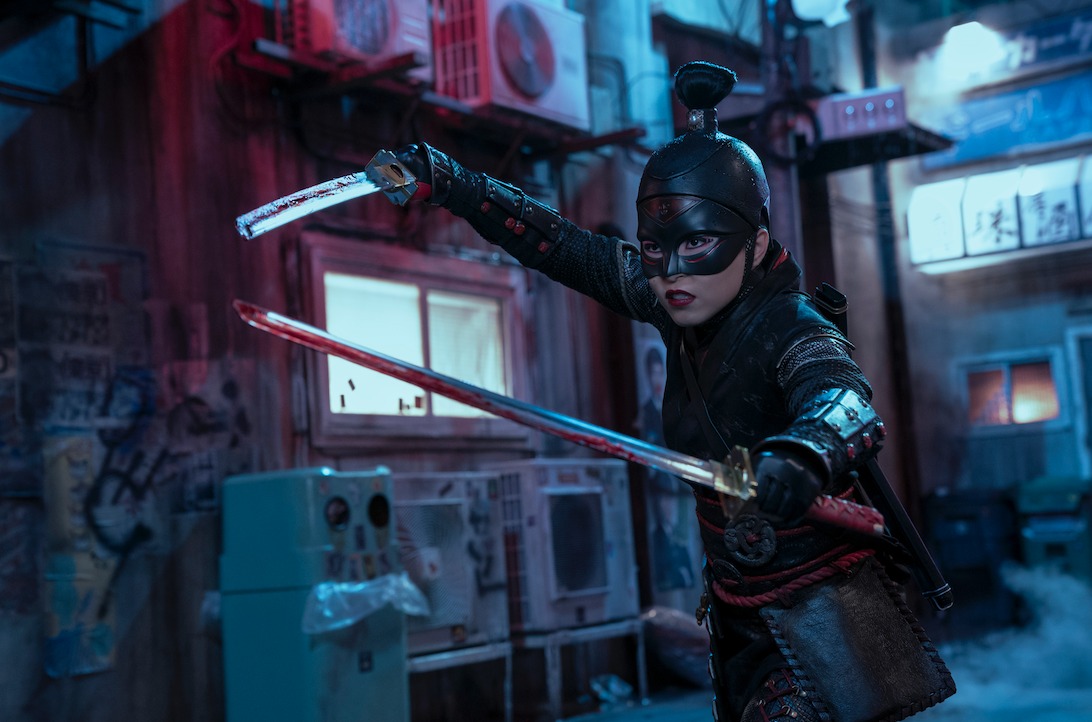
In episode 7, Omnes Pro Uno, you open with a kind of Blade Runner ambiance with umbrellas and a tightly choreographed Samurai fight sequence. What were you going for there?
Nicole: That was fun and challenging. We were in the middle of a freezing tundra in Toronto. They ran out of stages so they had to build one in the parking lot. And the night we were shooting, we were supposed to have a lot of rain, which was not there. So you only see drips of water because we couldn’t run the rain bars or people would have frozen. The sequence was an homage to a scene in the film called The Grandmaster. We wanted something very different from anything else in the show—as a standout.
Shooting on that island, with its different climates and that horrific sandstorm. Lots of prep I imagine?
Nicole: We shot that in a limestone quarry in Uxbridge, Toronto. The effects department and artists tiled the entire sequence. If you’re looking out, you’d see cranes and equipment excavating for sandstone. They created that landscape except for the sand portion where we were shooting. As for the sandstorm, the special effects department used thick, heavy paper particles and blew them out of canons using these huge fans.
When the Magic Wall lights up in neon symbols, our heroes enter a planet with its surreal imagery. I can imagine the challenges you faced shooting that.
Nicole: That was all on stage in Pinewood. We had five or six built-out stages. We used LED light panels to create the symbols that light up on the wall.
So when that huge wall opens up and the superheroes enter this blinding light, the effect was amazing.
Nicole: I borrowed the effect from Close Encounters when the ship opens up and there was this gigantic light. We had grips with this huge light source and we just let it blow out.
In the final episode, How it All Ends, the battle in the room of light beams is impressive. Can you talk about how you brought that to life?
Nicole: We shot that on green screen and initially tested the scene using real lasers but we would have needed hundreds of them, which would have created a hazard for the actors. So we got together with the visual effects team and shot it on green screen and lit it in a way that we felt would be interactive enough and create this alternate reality world.
What director or movie drew you into filmmaking?
Nicole: Good question. When I was in high school, we’d read a book then go see the film it was based on. And we saw some pretty unusual films—Pasolini movies, Antonioni’s Red Desert, and Vittorio De Sica’s Bicycle Thief. We learned how to tell a story two ways: through film and novels. Until then, I’d just wanted to be a still photographer. But I discovered that if you wanted to move people, you have to do it through film. Bertolucci and Antonioni were the two filmmakers who opened my eyes to filmmaking and cinematography. Their films were so beautiful and so rooted in image.
Any advice for young filmmakers trying to break in?
Nicole: The best advice I ever got was when I started working. I didn’t go through the regular channels—interning, assistant camera, camera operator, then DP. But because I had such a strong background as a still photographer when I graduated from college—and I’d gone to film school—a director I’d started with said just start shooting. I’d been shooting commercials for most of my career, so I had no idea what I was doing and I learned in the field. Back then, there were very few women shooting films. So I would say shoot short films, do your passion projects, and hopefully, you’ll hook up with someone who’s moving up with you
So how did shooting commercials help you?
Nicole: The thing about commercials is you operate your own cameras. If you start in narrative, you have a camera operator, so you don’t learn that craft. And because you have more money in commercials, you get to use all the new tools—new cranes, cameras, lenses. In indie films, you’re scrambling to get a good camera. With commercials, you get to travel the world and use the latest gear. But I got into filmmaking at just the right time because streaming was starting to take off.
Jupiter’s Legacy is available on Netflix

Alex A. Kecskes is a published author of "Healer a Novel" and "The Search for Dr. Noble"—both now available on Amazon. He has written hundreds of film reviews and celebrity interviews for a wide variety of online and print outlets. He has covered red carpet premieres and Comic-Con events for major films and independent releases.