


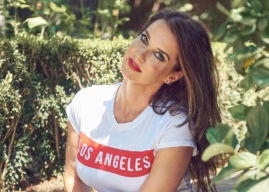
 Founder of Moviebar Productions, an award-winning full-service global film production company, Esther Turan is turning heads in Hollywood as a talented innovator in international filmmaking. Having produced 500 commercials and 30 feature film and television productions, Turan is building a bridge between European and American filmmakers.
A Hungarian Film Academy graduate and TV directing major, Turan segued into producing and is deeply involved in the creative process of every project. In 2017, she directed the first episode of a documentary called “BP Underground,” an eye-opening series that explores youth subcultures in Budapest in the ’90s and 2000’s. The first episode showcased the hardcore-punk scene, the second explored hip hop, and the third highlighted electronic music. The second episode–completed in 2018–won Turan and her co-director, Anna Koltay, the prestigious Highlights of Hungary Award.

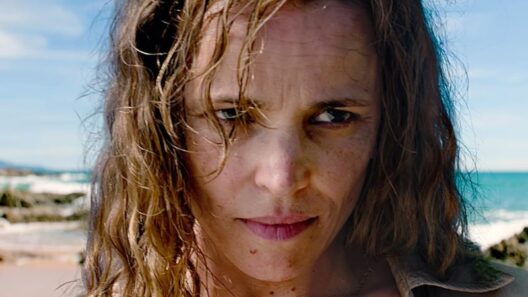
Turan is currently developing her first script with the support of the Hungarian Film Fund. In ‘The Reckoning,’ Turan is producing Neil Marshall’s 1665 England Witch Hunt horror feature starring Charlotte Kirk, Joe Anderson, Steven Waddington, and Sean Pertwee. Set against the backdrop of the Great Plague and subsequent Witch-Hunts against women, Grace Haverstock (Kirk) grapples with the tragic death of her husband Joseph (Anderson) in a society completely consumed by fear and death.
In this one-on-one interview, Turan reveals the joys and challenges she faced in her career and the making of “The Reckoning.’
With so many stories and genres out there, why did you choose to produce ‘The Reckoning’?
Esther Turan: I’ve been running Moviebar Productions with Viki Trepper, my co-partner and co-producer, for over 15 years. One of the reasons I came to Hollywood two-and-a-half years ago was to attract film producers and work with them. When I met the producers of ‘The Reckoning,’ I liked that it was an artsy horror movie with a strong female character. I also liked that director Neil Marshall would help guarantee the film’s artistic quality. It was a nice way for me to establish myself in Hollywood since we also offer film production services in Hungary. Shooting ‘The Reckoning’ in Hungary made sense because it’s the 16th-century story and we have two medieval backlots that we could easily restructure to fit what we needed.

Producing a film is fraught with challenges. What did you find most challenging about ‘The Reckoning’?
Turan: Timing. We didn’t have enough time for pre-production. You can always use more shooting days. You also want more time for post-production. We’re in the last days of post and there are some great film festivals we plan to enter. What I like about filming in Hungary is that they have a terrific tax refund system—37%–for filmmakers, which is insane.

What do you like about directing as opposed to producing?
Turan: I was trained as a TV director at the University of Budapest, which is a very prestigious school. Then I decided I wanted to produce. But I recently shifted back to directing because I felt the urge to deliver my message. As a producer—I love it—but you’re always the mother of someone else’s baby. In Hungary, directors will develop their own ideas and won’t take on someone else’s film. But one of the things I learned in Hollywood is that you can create and develop your concept and then team up with fabulous directors to see it through. I moved into directing because I realized I had so much to say and I wanted my voice to be heard.
Who influenced you the most in your film career? Your parents, a particular mentor?
Turan: My father is a playwright in Hungary. And my aunt is one of the most widely known movie stars in Hungary, starring in many films in the 60s and 70s. So I grew up in the industry. Whenever we had a family gathering, it was always with people in the film industry. I was initially interested in acting but soon realized that I wanted more control. In Hungary, it’s very tough to be an actress. Aging is a big factor. And it’s cruel. As you get older, you’re given less meaningful roles. Acting is also language-dependent and I wanted to be more international. So I think my aunt and my father had the most influence on me.
What have you learned about directing that surprised you?
Turan: The fact that you have to pay attention to a million things simultaneously. For me, it’s even more schizophrenic because I’m also the producer and I have dialogs with myself. As a director, I want more cameras, more crew, more days to film. But the producer in me reigns that back in. Something else I’m experiencing as a female is I have work to harder to gain the respect or attention of male crew or directors. And I think that’s a bit unfair because they would take a male director or producer more seriously. And that male bias exists in both Hungary and Hollywood.
Another thing is language bias. Yesterday, I received an email from a guy in Hollywood who thought I spoke Russian so he added Russian sentences to his email. I was offended and I wrote him back, indicating that I don’t speak Russian. Russia is thousands of miles from Hungary. Like what was he thinking with that stereotype? My family and I suffered under communism. Others, who also read that email, apologized for the man’s insensitivity.
Are you a hands-on director or do you do allow your talent some freedom to improvise?
Turan: I’m a good listener. But generally, you have to earn my trust because I’m a control freak.
What was it like exploring Budapest’s underground electronic music scene?
Turan: The documentary series ‘BP Underground,’ reflects the interesting time in which I was born–one of democracy. It was a young, wild and fragile time in Hungary. No one knew what was going on. The film reveals what it was like to be young when the regime changed. How we defined ourselves. How we reacted to everything happening around us. When I watch the series ‘Narcos’ on Netflix, it reminds me of the ‘Wild West’ of Hungary—there were no rules in the mid-90s. No one was quite sure where Hungary was headed as a country. So being a teenager in those days and exploring all those subcultures that emerged from the West was a fascinating time of self-expression.
I’m old enough now to pay tribute to that. I wanted to show the similarities between the subcultures in the West and things that occurred on the edge of East and West—where we lived. I believe in the talent of our country. We produce so many fascinating people in so many genres and fields. And I’m so happy to discover them and show them to the world. I just feel that that segment of the world remains pretty undiscovered. I’m also working with people in Hollywood on an English-language miniseries, one that addresses the uniqueness of Hungary in an internationally interesting way.
Check out: Moviebar Productions

Alex A. Kecskes is a published author of "Healer a Novel" and "The Search for Dr. Noble"—both now available on Amazon. He has written hundreds of film reviews and celebrity interviews for a wide variety of online and print outlets. He has covered red carpet premieres and Comic-Con events for major films and independent releases.