




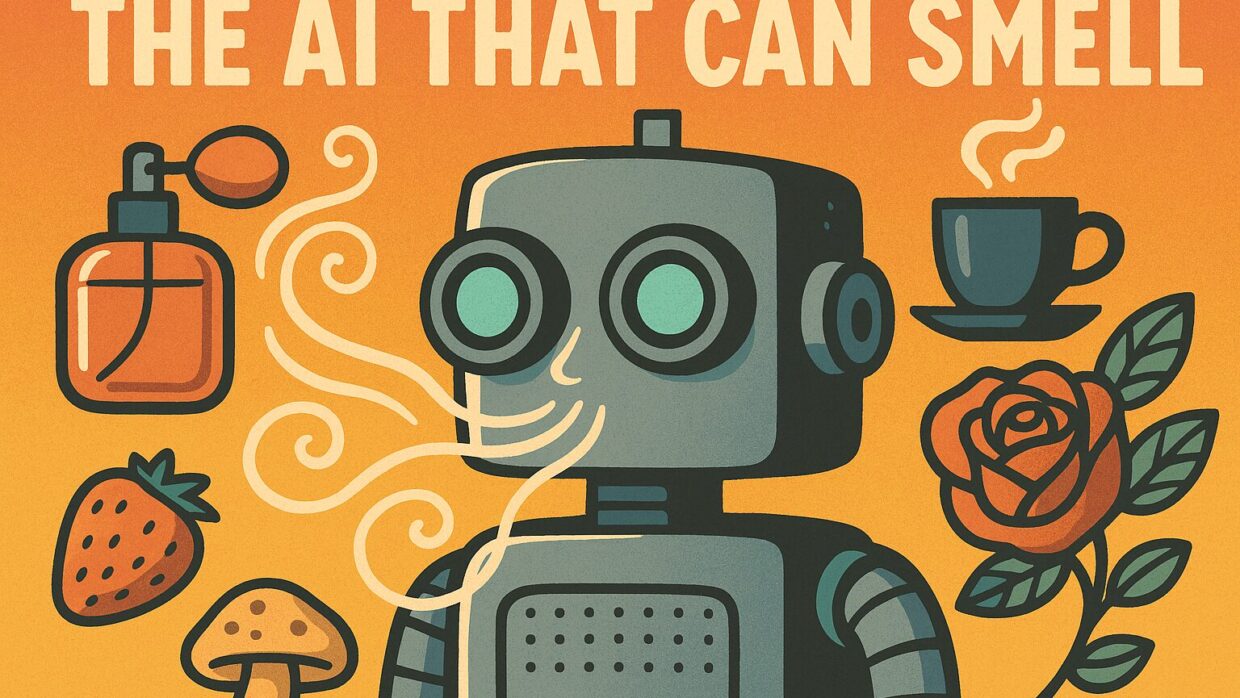
Ever wondered if your phone could sniff out bad sushi or recognize your ex’s perfume? Neural networks can now smell—yes, literally—and it’s weirder and wilder than you think.
Forget taste and vision—smell is the wild, chaotic sibling no AI has tamed… until now. Researchers are blending electronic noses, spiking neural networks, and cloud AI to decode scent. From sniffing bombs to diagnosing cancer, this sensory frontier is wide open. Welcome to the era of olfactory intelligence.
What even is an electronic nose (e-nose)?
Think of a tiny gas sensor array that mimics your nose’s receptors. They sample volatile compounds, spit out electrical signals, and rely on algorithms to identify patterns—just like your brain would. But old-school ones are bulky and limited. Enter neural nets.
Neural nets + smell = magic
Researchers at Zhejiang University built an e-nose using metal oxide sensors connected to a spiking neural network (SNN)—a model that mimics biological neuron firing. It detects gas mixtures with shocking accuracy (MAE < 0.01) and way less data than traditional methods.
Graph Neural Networks = molecular maps
Huge chemical spaces, meet GNNs. Recent breakthroughs used graph neural nets to link molecular structures with scent profiles—creating a “map of smell.” This led to digitally encoding a plum’s fresh hue…er, aroma.
Some models like DeepNose even use 3D molecular data to predict how a scent smells, matching or outperforming human panels.
Why it matters (a.k.a. AI that sniffs better than you and me)
- Cancer-smelling drones? Hospitals are testing e-noses to detect early signs of diseases via breath.
- Security checkpoints, but smarter. AI-powered sniffers can detect explosives, narcotics, or even disease biomarkers with pinpoint precision. No tissues, no TSA.
- Fragrance revolution. Spinoffs from Google, like Osmo, are designing sustainable, next-gen scents without harvesting rare botanicals—thanks to learned odor maps.
Hot take
We’ve digitized our selfie filters and playlists—why not scents? Yet smell’s messy, personal, and wildly complex (400+ odor receptors!). These neural nets aren’t just rehashing old tech—they’re building fragrance AI from scratch, synapse by synapse. The result? Stink detection that’s smarter, faster, and more scalable than a thousand lab noses.
What’s next for olfactory intelligence?
- SmellNet: a massive real-world scent database—180k samples across 50 foods—training future e-noses to recognize stuff in sweaty gyms all the way to chef’s kitchens.
- Brain–computer-nose interfaces: Tech like Canaery taps directly into animal neural signals, allowing trained dogs and rats to detect bombs, diseases, or drugs—and communicate those findings with near-instant accuracy.
Final Whiff
AI isn’t just learning to see and speak—it’s learning to sniff. Neural networks are decoding odors like high-tech bloodhounds, mapping the invisible and making scent digital. This isn’t some perfume pitch—it’s diagnostics, security, and sensory science on overdrive.
The nose knows, and soon, your devices will too. Let’s just hope the future smells more like innovation—and less like gym socks in a data center.

I write like I think—fast, curious, and a little feral. I chase the weird, the witty, and the why-is-this-happening-now. From AI meltdowns to fashion glow-ups, if it makes you raise an eyebrow or rethink your algorithm, I’m probably writing about it. Expect sharp takes, occasional sarcasm, and zero tolerance for boring content.