



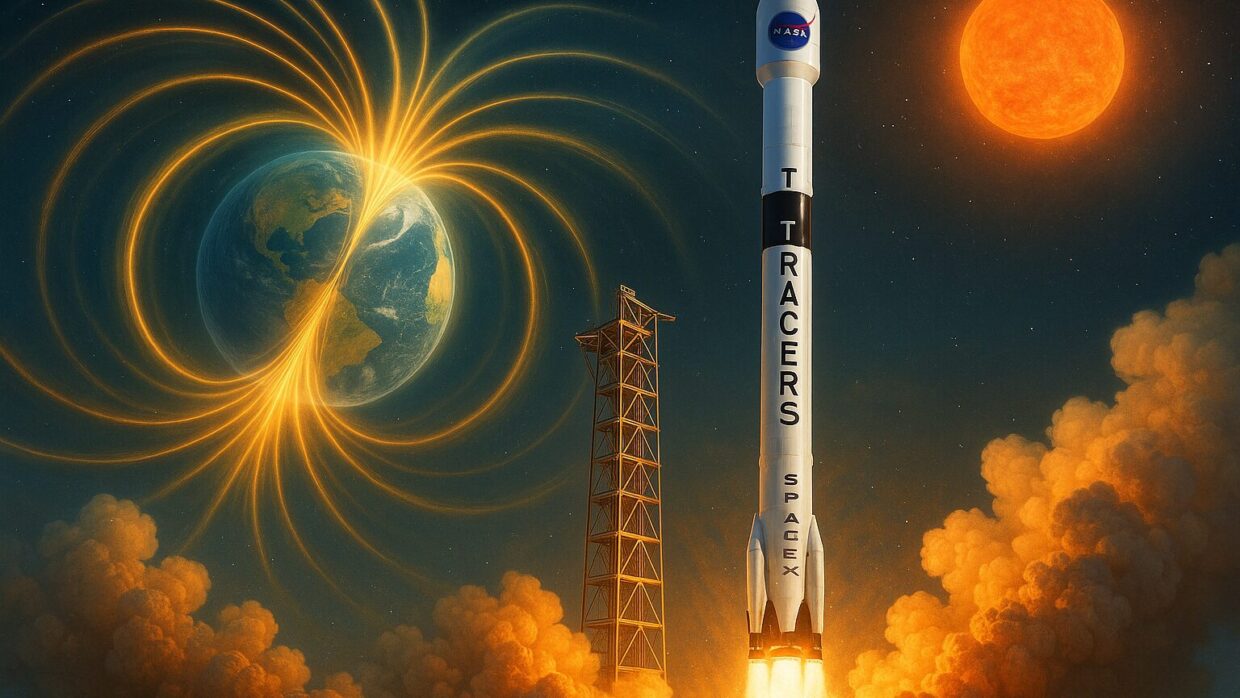
Get your caffeine ready and your jaw pre-dropped—tomorrow at 2:13 p.m. EDT, NASA’s twin TRACERS satellites are blasting off to spy on the wildest magnetic fireworks in our skies.
Mark your calendar: on Tuesday, July 22, 2025, NASA’s TRACERS mission is launching aboard a SpaceX Falcon 9 from Vandenberg. These two little satellites are headed straight for the polar cusps—the chaotic edges of Earth’s magnetic field where solar wind crashes in and things get electric. We’re talking bursts of energy strong enough to rival nukes. If you’re into space storms, northern lights, or just cool science, this is your Super Bowl.
Why TRACERS Actually Matter
1. Magnetic reconnection: the ultimate cosmic snap
This isn’t just nerd talk—magnetic reconnection is what launches charged particles into deep space and occasionally triggers geomagnetic storms that can fry satellites, mess with power grids, or drop your GPS signal. NASA says a single reconnection event can unleash the equivalent of America’s whole energy consumption in a day. Terrifying.
2. Twins in tandem = dynamic duo data
Past missions took one-photo snapshots. TRACERS is shooting video: two washing-machine-sized satellites flying about 10 seconds apart through polar cusps to catch reconnection cascades in real time—up to 3,000 events in a year.
3. It’s small, cheap, and smart
Part of NASA’s mini-sat mission series, TRACERS launch alongside three CubeSats (Athena EPIC, PExT, REAL), all loaded into a Falcon 9 rideshare—the kind of lean, collaborative space hustle that keeps scientists smiling (and budgets intact).
Hot Take
This isn’t just another space stunt—it’s the dawn of real-time magnetospheric science. With twin satellites snapping reconnection in motion, we’re upgrading from blurry snapshots to cinematic universe-scale choreography. Better prediction of solar storms means prepping for grid blackouts, satellite meltdowns, and wild aurora shows—essential for our tech-wrapped world.
If TRACERS nails it, we’ll finally see what happens before space weather goes haywire. And that’s the kind of proactive science we need in a connected age.
Take a Moment
Mark your clocks. Whether you’re tuning into NASA’s livestream or planning to gawk at northern lights, know this: July 22 could change how we see the invisible forces shaping our skies.

I write like I think—fast, curious, and a little feral. I chase the weird, the witty, and the why-is-this-happening-now. From AI meltdowns to fashion glow-ups, if it makes you raise an eyebrow or rethink your algorithm, I’m probably writing about it. Expect sharp takes, occasional sarcasm, and zero tolerance for boring content.