


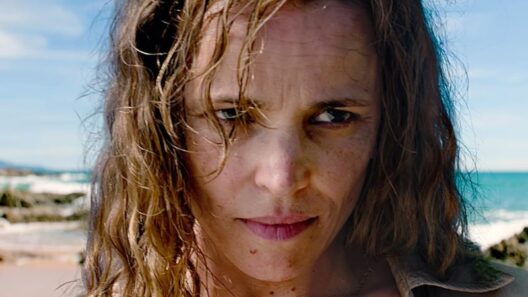


Known for her gritty roles as Sarah in the adventure/horror/thrillers “The Descent” and “Descent: 2,” and as Carole in the comedy/crime/drama “Filth,” Malaysia born Shauna Macdonald was raised in Edinburgh, Scotland. She is also known for her role as Dr. Wallace in the TV mini-series “The Cry.” In the sci-fi/horror/political thriller “White Chamber,” Shauna is Ruth/El, a bio-weapons researcher trapped and initially tortured in a blindingly white cuboid cell. In this one-on-one interview, Macdonald reveals her passion for acting, the early obstacles she had to overcome, and her commitment to the thriller/horror genre.

The role of Ruth/El was fairly brutal and stark. No makeup, no fancy clothes, and lots of bright, unflattering neon lighting. What drew you to this film and the role of Ruth?
Shauna MacDonald: This genre has been really kind to me over the last 15 years or so since “Descent” came out. I’ve been very supportive of this genre and I’ve chosen only a few of the scripts people wanted me to do. When I look for a part to play, it usually has to be something in the horror/thriller genre. There has to be some sort of trauma and high stakes with a huge emotional roller coaster that involves some type of torture. The interesting thing about El is that she was so contained for so long. She’s like a calm lake amidst torrents of things swirling underneath her. But then she can’t hold it back anymore. It plays with the idea of how far a person will go for his or her own cause. And how lying and doing good in a situation can get a bit blurred because everyone is just doing what they think is best. In this film, what they think is best in their environment—whether it’s in the chamber or in the facility—is kind of left to their own devices. Humans can be cruel, verging on hateful and evil because evil means you don’t have to try and empathize with your actions. It’s kind of humanity at its worst. 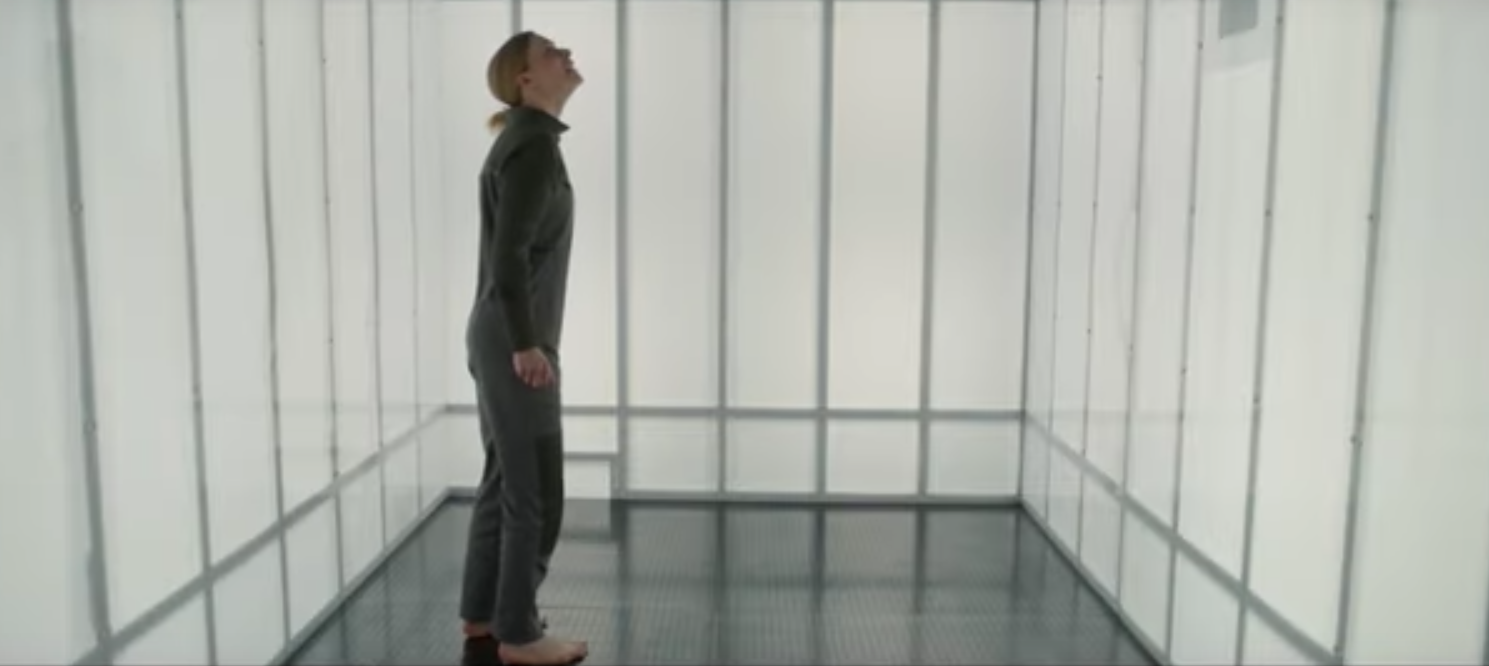
Was it claustrophobic being in that white neon-lit cell during filming?
MacDonald: There were only a couple of camera shots where I’m on my own. There were also shots where the camera was inside with me. But I was completely confined in that small space. And I don’t really like being in that situation. I won’t take the lift. I’ll always walk—even if it’s 15 flights. I don’t like being caged. Of course, when you’re playing these highly emotional states, your body can trick your brain into actually feeling terrified. As an actor, when you’re playing terrified, your breathing is all over the place and you don’t like closed spaces. So you kind of have to trick your mind a bit because you can’t freak out or the director will make you reshoot the scene. I was being ‘electrocuted’ three times in three scenes and Paul (Raschid), the director, wanted another take but I said no. That was enough for me. 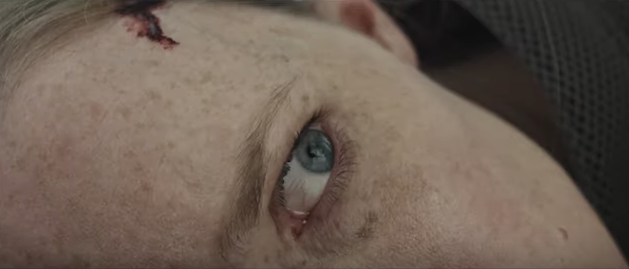
Actors often draw from real-world experience. Was there a life experience that helped you make Ruth such a convincing captive?

MacDonald: I’ve never been held in a confined space and not been allowed to get out of it. Of course, you’ve got to imagine what it would be like, but that’s kind of the fun of doing horror. You just have to use your imagination and go there emotionally. But it would be difficult if you had actually experienced something like a panic room situation and then be asked to act it out in a scene for a film.
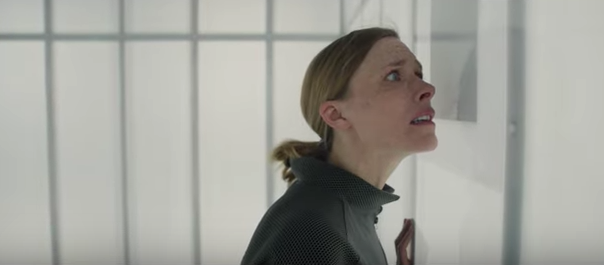
The film addresses a number of issues: sanctioned torture, the weaponization of the human mind, research gone amok. What do you see as the film’s core message?
MacDonald: It would be how far people would go for their cause. How the lines get blurred when you’re fighting your own fight. One person’s terrorist is another person’s freedom fighter. The film doesn’t try to paint a right or wrong picture but touches on the fog of war that happens with humans at their most extreme. And what happens when their emotions are unleashed when they’ve lost so much in their own lives. Their morality goes and if you have that loss, you try to find atonement. But during that journey, you’re enjoying the revenge part, which seems cathartic. You’re abandoning control, especially El, who works in a very controlled environment. She’s been very composed up to a point with her statistics and her science, but then her emotions explode. She simply doesn’t make sympathetic choices. It’s funny, we took this film to South Korea and they saw it as a feminist film and I thought, wow, I didn’t get that angle.
There are some pretty powerful scenes in this film—both inside and outside the chamber. Which challenged you the most?
MacDonald: Definitely inside the chamber, because we shot it with only me on screen, so to make it interesting for an audience, for them to commit to watching the film in the first few minutes, there was this pressure to make it as interesting as possible. I mean, it’s just me in a box. So I had to commit to all the physical challenges—the extremes in temperature, the ‘electrocution,’ the acid on my skin. So it was physically and emotionally challenging to keep that up all day. 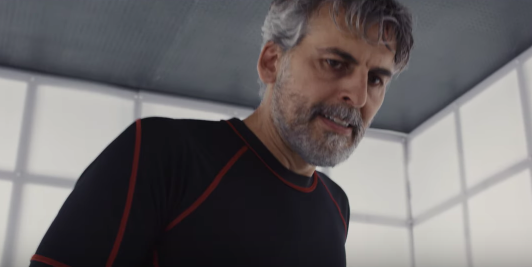
The tense relationship between you and Oded Fehr was authentic and palpable. How did you and he work on that to make it so convincing?
MacDonald: Oded was great. He’s based in the States, so we had a bit of Skype rehearsals. But then, when he came over to film—and not all actors do this—he made sure he was there the whole day to deliver his lines off camera. He knew it would enhance the performance of the other person on camera. We did that for each other. I’d also like to stress that this was a micro-budget movie that was shot in twelve and a half days. And this was no luxury production. Everything was stripped back in terms of what you’re used to in the industry. No fancy dressing trailers or 5-star hotels. It was low budget all the way.
What were you like in high school? Did you know then that you wanted to act?
MacDonald: As a young kid, I was very shy. I had a lisp speech impediment, which made me not talk much at all. My mother sent me to various specialists. But it wasn’t until I was about 13 that I discovered acting. I’d lived so much of my life being terribly shy. I didn’t realize that the acting school l went to would have me perform. I thought only competent kids would be asked to do that. But I later realized that acting was more than that—experiencing different situations and working with your peers. I kind of knew by 16 or 17 that this is what I loved. But I wasn’t really confident enough to think that I could be an actor. Then I was lucky and got into a good drama college at 18. I was there for three years and at 21, I moved to London.
What was your first big break when you realized you could make a living as an actor?
MacDonald: I got my first acting job at 16, where I did a film called the “Debt Collector” with Billy Connolly. After that, little jobs kept popping up. While at drama college, I did a couple of features and got an agent when I was quite young. It kind of just snowballed after that. When I went to London, I got a job in a prime time TV series called “MI-5.” And that’s when things started to kick off and I got cast in “Descent.” I’ve stuck in there when things seemed like they would stall. The horror genre seems to be where the industry respects my work, where I always feel welcome and valued.
How did your kids react seeing you bloody and screaming in your earlier films like “Descent”?
MacDonald: I have three girls and I’ve often taken time out to be with them. They see only the images. They’re a bit young to see the movies. I kind of want them to watch the movies to get some respect (laughs). They kind of think it’s cool and I go to a lot of conventions where many people think what I do is cool. To be honest, like most actors who have kids, my kids don’t really care. My kids just want me home. I try to explain that when I’m home, I’m basically unemployed. They want me to do cool, fun action horror films.
What’s next for you? A nice romantic comedy perhaps?
MacDonald: I did just do a film with John Cleese. It’s not a rom-com, it’s more high drama, but you’re absolutely right, I need to do some sort of rom-com that my kids can really get into.

Alex A. Kecskes is a published author of "Healer a Novel" and "The Search for Dr. Noble"—both now available on Amazon. He has written hundreds of film reviews and celebrity interviews for a wide variety of online and print outlets. He has covered red carpet premieres and Comic-Con events for major films and independent releases.